Showing posts with label gender boxing. Show all posts

Tuesday, August 7, 2018

False Dichotomies and Binary Thinking

 
(Originally published on LinkedIn)

The false dilemma is a logical fallacy that presents two options as the only available choices in a matter when at least one other option exists. When parents have toddlers, they're told to give them two choices for simplicity, so that they feel they have some control over their life, some power, but they aren't overwhelmed with options.

This is also how sex and gender are presented to us: you're either male or you're female. For most people, that isn't a problem. They readily agree with the sex they were assigned at birth, and they take pride in either conforming or not conforming to their gender roles. Not conforming is really only a pride point for those assigned female at birth because aspiring to be male is socially acceptable, but the feminine is seen as weak, "silly," and undesirable. Anything attached to the feminine is immediately considered only for those with a vulva. When something is attached to the masculine, it is considered a sign of strength and power, and thus, all are invited to participate--most of the time.

From before birth, from the moment parents get a glimpse of their offspring's genitals, they begin socializing them to either the feminine or the masculine. Expectations are lain in the moment that genitals are announced. "It's a girl!" is followed by per-condemnation of her sexual agency, sympathy expressed to the father as though a girl is a disappointment that can only bring stress. This is, of course, a self-fulfilling prophesy if the parents so choose. "It's a boy!" is followed by dinosaurs and sports and dreams that he'll be a doctor or lawyer or something big and important.

But there's a third occurrence that brings silence. No joyful declaration of the genitals unless the doctor has already decided how they are going to alter them without consent. "Intersex." Neither male nor female. Perhaps more one or the other. Many intersex individuals are missexed as male or female because their external genitalia is all that is used to determine how they will be socialized.

A growing body of support for intersex people condoning the non-consensual body modification is also attempting to bring light to the existence of intersex people, often offensively and inaccurately termed "hermaphrodite," as though they are an insect. Few people would deny the legitimacy of red-haired individuals, but they are only 2% of the population--the same percentage as intersex people. But intersex people force a reminder on society that their aggressive sexing and gendering of each other is often inaccurate. If not, then there would be a name all people know for the third sex, and a third gender, and the same joy (with maybe a little trepidation for possible medical complications) would be present in the announcement, "It's an [intersex baby]!"

Still, some acknowledgement that intersex people exist is present in the collective consciousness. But rather than see them as valid and natural, they are treated as an aberration, something to apologize for. A neutral pronoun identifier is rejected, and they are expected to conform to whatever sex they were ultimately assigned and blend in as one of the two dominant genders. Their own sex may even be hidden from them deliberately by their parents or the doctor that incorrectly sexed them at birth. They are an affront to the false dichotomy of sex.

Worse, there are those whose genital expression and reproductive systems match a chromosomal pattern that has been deemed male or female who know that they are not the gender they were told to conform to. Transgender.

There is an interesting story out there of a little boy whose mother decided that she wanted a girl so badly that she gave birth unassisted, assigned him female at birth, dressed him in girl's clothing and told everyone he was a girl, sent him to an all-girls' school, and he grew up believing that he was one. He said the he thought that maybe his penis would fall off when he reached puberty so that he would look like other girls. He socialized female.  But then one day, it was all blown open when a teacher removed his dress to protect him from a hot liquid spill and saw that he was male. Immediately, he was removed from his home, and everyone was in an uproar, calling it abuse. What he called abuse was what followed: having his hair cut against his will, being told to behave as a boy and develop masculine interests that he simply did not have, until he was finally placed with a family that allowed him to be himself. He concluded that he was definitely male, but his interests were still considered feminine--and he was still happy with himself.

Transgender children grow up in the same situation, only their genitals cannot announce to someone that they are being forced into an unnatural situation for themselves. Instead, a conspiracy forms around them to ignore that they are being harmed even more than that little boy was because no one will rescue them from the situation. In more and more cases now, parents are realizing that their children's genital configuration is not more important than their health and well-being. Children whose expressed gender identity is honored grow up happier and healthier, even if they end up being cisgender.

However, this is still primarily granted to female to male and male to female individuals. Female to third gender and male to third gender children are lost. They are given a false dilemma: are you male or are you female? Neither is a valid answer that is not being acknowledged enough. There are many nonbinary identities, from fluid (going from male to female and back) to agender (lacking gender) to bigender (simultaneously both), and more. Growing up, some of these children may present as fully transgender, or they may present as gender nonconforming within their assigned sex. "Tomboy" is a false identifier that some trans boys and nonbinary individuals assigned female at birth (AFAB) can cling to for a better way to tolerate or escape the pain and/or confusion of being misgendered.

Cisgender girls will use their own identification as a tomboy to de-legitimize the experiences of trans AFAB people, claiming that because their gender confusion vanished, it must do the same for anyone else who experiences it. This is an aggressive form of transphobia that is used to prevent medical care of trans boys and nonbinary AFAB children rather than acknowledge that there is no harm at all in giving children the safety and support to explore their genders until they are able to give words to their own identity. If a third gender were automatically acknowledged, yes, there would be more third gender children because they already exist, and they would then have the words to say so. Just as naming anything leads to discovery of more of that thing.

This isn't some new experiment, either. Third genders have existed in many cultures throughout history with no cultural pain. It is confusing why ours is so insistent on denying something that has existed as long as humans have had a sense of gender identity. The best explanation seems to be that dominant groups simply will not tolerate outsiders. Once schema is formed, it wants to be defended. The only cure for this is to establish societal change that adds third gender into the schema children are programmed with, but it is the adults that resist this, that reinforce the myth that there are only two sexes, only two genders, and that there is no difference between what is between one's legs and what is in one's heart and soul.

Cisgender people may be under the mistaken belief that transgender girls (assigned male at birth--AMAB) exist because they are told that dolls and dresses are for girls, and those "boys" are interested in such things and therefore confused that they are girls. That simply isn't true. Many boys, both cis boys and trans (AFAB) boys enjoy dolls and dresses, but they avoid them in their attempt to conform to stereotypical gender roles. Trans boys may be socialized female, but many recognize that males are supposed to behave in a certain way, and they internalize it. Trans (AMAB) girls do the same. They may show more interest in feminine iconography--dolls, dresses, makeup--simply because they want to be seen as what they are: girls. For quite some time, in order to transition, one had to prove that they were female enough to be acknowledged medically. Preferring pants and sports might get a sporty trans girl denied legitimacy. The lack of connection with gendered objects and clothes exists in trans people just as it exists in cis people. Just as there are cis girls who love sports and wear "boyshort" underwear and hate makeup and dresses, there are trans girls who feel the same. That doesn't make either group male.

But what about the third gender? Why do they know that they are neither male nor female? It is the same way that cisgender and binary transgender people know that they are male or female. In the past, Western world third gender people did what they could with what they had, just as all trans people had to. It may have been easier to be "eccentric" post-Humanism, in the Renaissance and beyond. For binary trans people, it was simpler to move somewhere that no one knew them and assume their true gender while hiding their assigned birth sex. Records of people who did this exist. This is how the medical establishment insisted trans people transitioned at one point, but that is no longer the case. With the growing body of evidence that nonbinary people have been erased via language rather than scarcity by establishing them into language, there is hope that in the future, this is a false dichotomy that will eventually be abandoned as unscientific, inaccurate, and antiquated, just as many sexist notions throughout history have been left behind.

Saturday, October 4, 2014

Random Musings and Rants on Character Development and Criticisms

I both love and hate tropes. I love to abuse them -- take them and twist them into something other than the way they're usually used. I like to use them appropriately. I like to piss all over them.

One complaint I expected for my first books was for the main character. He's not John Wayne. He doesn't like John Wayne. He's not Jack from Will and Grace. I'm not sure they'd even get along. No, he's not a manly man, and he's not a flaming queen. He's bisexual. He's a geek. More, he's a B character in his own world.

That was the whole point.

He was meant to be an ordinary geek. Not some hero or super-villain in training. Part of my thought process behind him was to look at the flunky -- the guy under the villain -- and follow his transition to becoming said flunky. Not even the villain's right hand man (who, in this series, is actually a woman).

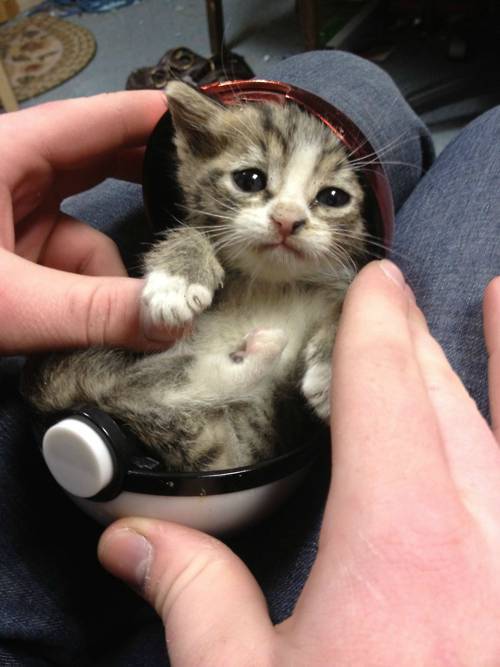
pictured: a geek's kitten from Le Meow

So, I get people bitching that he's not manly enough. Someone whined about how my characters weren't fitting into gender boxes.

I. Hate. Gender. Boxes.

They aren't realistic, for one. They aren't healthy for another. I can't stand the guides that say "How to write a believable [gender] character." They're full of gag worthy stereotypes that don't reflect any of the people I've known in my life of either gender. 

News flash: this is how you should treat people and characters both

I remember one: "Guys don't giggle." 

Uh, yeah they do. I've heard many guys giggle. Some guys don't, but if you've never heard a guy giggle, then you've probably missed an entire culture (or three) of men. Gay guys giggle, but not all of them. Geek guys giggle, but not all of them. Straight, average guys giggle, but not all of them.

Any time you say not to do something for a group, you're being presumptuous and building on stereotypes that really only match your own experience. While there's nothing wrong with writing from your own experience, there is something wrong with telling other people that only the stereotype you believe in is right.

It's not. Stereotypes are looked down on for a reason. I base my characters on real people. That may be shocking, but I think it's more shocking that some people feel that makes them 'unbelievable.' Now, when I say that, I'm not saying I'm inserting people I know as characters -- but I'm using real, observed traits from real people when I get to know the characters I'm writing about instead of relying on stereotypes and tropes.


I don't expect everyone to like them. Shit, that would be like expecting everyone to like anyone. But trying to say they don't meet their expectations for a stereotype just makes me shake my head. I'm not going to take that as constructive criticism. That's just whining. John Steinbeck said to write to just one person... I think that's too simplistic, but I think that the idea that you aren't writing to everyone is a good one.

Someone recently accused me of not knowing my audience because he wanted a 'gay vampire' book instead of the psychological horror novel with vampires that I wrote. He couldn't have been further from the truth. I know who my audience is: it doesn't include biphobic, sexist bigots who are looking for erotica. My books aren't erotica. They have sex in them because sex is a part of life, and my books are 'slice of life'-heavy.

They also don't include a bunch of vulgarities or clinical anatomical terms in the sex scenes (or flowery romanticisms that make me want to vomit, like 'honey pot' or 'turgid staff' -- hey, if that floats your boat, feel free to self-insert them; just don't torture me with them or expect me to make my editor's eyes roll into the back of her head before rightfully deleting that shit). I love sex, and I am totally comfortable with it and writing sex scenes. I'm not going to adjust my style to make my books wank fodder when that has never been what they are.

I write what I know, and what I don't know, I research, from the mouths of those who do know, not just books or blogs about a subject. Which gives me this radical idea that people can't really be boxed. And maybe some people want characters to be boxed, but I don't. Maybe that means I'll never be a New York Times Bestselling author (not knocking books on the NTY list, I'm knocking whiny critics), but I'd rather be true to my characters than create two-dimensional caricatures.


Friday, November 26, 2010

You're Doing It Wrong!


Men aren't as helpless as most women think. And the helplessness they display is not imprinted on the Y chromosome, no matter how much we've convinced ourselves otherwise. The fact is that men are trained to be helpless--usually by the very people who most want their help: women.

I'm not talking about domestic duties (although many men act like the trash magically gathers itself and that they might blow up the washing machine if they have to try to use it) but in being an equal partner in parenting.

Now the defeatism usually starts in that first year when most babies are programmed to automatically want Mommy for everything. If Mom's breastfeeding, this typically means that when it comes to feeding (which, in the first two months, seems to be every waking moment!) Daddy IS helpless. The things he can do at those times promote more of a bond with Mom than Junior (and is that a bad thing? Staying bonded with Mom?). However, feeding is hardly the end-all of parenting a new baby and most women don't breastfeed or at least don't do it exclusively. Dirty diapers are not the only other thing that babies need taken care of, either.

However, the really defeating thing comes when Mom says, "Here, let me do it." There's a learning curve, ladies! We had to do it, so does he! Also, guess what? There's not just one single way to do everything.

I know that's hard to hear. It's hard for me to deal with, personally. I hear my husband taking care of the kids and I want to run in and correct this or that and despite what he'd say to the contrary, I actually have been practicing restraint lately and letting him just do it.

Now, some things, he's always been a pro at--like diapers and dressing the kiddos--but he had an advantage: a baby sister. I was the last born in my immediate family and until I was holding my own, I never touched a new born baby. My sister called me in to help out with her second and I loved it, but she was already a few weeks old before I actually held her. I did learn some tricks to colic, though, that were nice and useful! But for real baby care, of course she did most of it and mainly when I wasn't there.

My husband, however, was right there with his little sister for it all. He even did his share, since he was an older child when she was born. So he came with more confidence and expereience than the average man--and yet, he was just as nervous as any new father and felt just as clueless as to what to do with himself.

Now, I'm not going to sacrifice the baby by just leaving her with him (she was a nursing maniac and wanted nothing to do with him, poor guy--it's no wonder he ended up feeling helpless!), so he didn't get thrown into the deep end like many men who become baby pros do.

It was really later, though, as he was building up his confidence because she started wanting to spend time with him (as everyone had assured that she would!) that I started breaking it down. Correcting small little things, "Oh, I don't do it that way." "You're taking too long, let me do it." "Oh, no, you're doing it wrong!" I don't know why. I just don't seem to know how to walk away and let him do it, so I hover and watch, (which, let's admit, is like watching someone with a different video game style playing--you want to take over and show them how it's really done). Instead, lately, I've started forcing myself to find other things to do when I've asked him to help out or if the kids have asked him.

But it doesn't start when baby comes home. It starts long before that, when our husbands were boys and somebody's sons. First, the gender boxing. "Boys can't wear pink." "Boys can't play with dolls (and if they do, we must call them action figures)." Boys even often get kicked out of playing house in pretty much all forms. They might wander their way into a play kitchen.

Now I don't know if this attitude is as widespread as it was when I was a kid, because I live in this neat little bubble where the vast majority of my friends are against gender boxing. I still have some that were raised with and cling to the idea of boys toys vs. girls toys, but they are the minority now.

This continues later as boys grow into young men. Girls in the family are often sent to look after siblings and do domestic duties while boys are sent to look after cars and do yard maintenance (which leads to the feminine version of helplessness where women think they can't change a tire or mow the lawn). It's becoming more popular to let boys in on the domestic duties (especially since most major chefs are men and men need to pick up after themselves, too) and teach girls car care, but mainly, boys are still not included in the child care development.

This discrepancy can really be seen in one of the first teen jobs: babysitting. Now, while I know parents who'd take a boy babysitter who's known to be responsible, this isn't true in most homes. Even most homes who say they'd hire a boy to babysit, if offered the choice between two inexperienced teens, one male and one female, they are going to pick the girl. Women are just identified as more nurturing and boys are held with the misandrist view that they're unpredictable and dangerous.

I happen to know someone who's first husband lost his virginity to his babysitter when he was 10. So, uh, yeah... nurturing... And yet, more people would be horrified if the gender was reversed--somehow, it's okay for a 10 year old boy to decide to have sex with a 16 year old girl, but the other way around? They're both statutory and they're both just as harmful for the 10 year old.

But that's beside the point. This all leads to men having less training when the kids get in in a lot of homes, but certainly not all! I've seen homes where the women had less experience, most definitely. Sometimes even in these, though, the men are made helpless by that mama bear instinct.

It bothers me a lot when a group of women is talking about their husbands and one brings up a situation she wants to change where the group response is, "What do you expect? He's a man!"

That is just as wrong as a woman going into a new profession, stumbling and having the men say, "What do you expect? She's a woman!" Oh, there the tempers fly! Misogyny cannot be let go, but blaming a gender for the inefficiencies of its individuals who happen to have a Y chromosome? That's fine. Actually, that's called misandry and it's not fine.

It's damaging. It damages the men who are just left to flounder, unaware that they could learn the very skills they have been told men just aren't any good at. It damages our sons, who hear this garbage and grow up believing that's just how it is. It damages marriages who crumble because women have been taught that they're supposed to do everything. It damages women who really are left to carry more burden than they can handle and don't know that it's okay to ask their husband for help and to let him learn and let him make mistakes. We made them, too.

Yes, sometimes we had our mothers, sisters, aunts, random other women in our lives standing over us and correcting us. But most of us have the strength to say, "I'm glad that worked for you, but this is what works for me." Men aren't taught to communicate that way. Most end up angry, hurt, resentful and not knowing how to express that in a way that doesn't blow up in their faces or just assuming that they really can't do it.

Obviously, not all men are like this, just as not all women are. But this is the average family. And it doesn't have to be.

Men can wear their babies, dress them, bathe them, give them solids when they're six months or older, play with them, do tummy time and Gymboree with them. Oh, yes, they can! They can hold them close and make rumbling noises in their chest that we can't and that babies find soothing. He can take Junior to the potty in a super-hurry because she's got to go NOW! He can gather up toys and decide how the playroom is arranged and pick out the kids' clothes (and it's not the end of the world if his fashion sense is different from ours). He can wipe their face differently, he can put their socks on after their pants and their hat on before their shirt and it still all ends up on there. He can brush their teeth and play video games with them, etc.

Dad can do it. And if we're lucky enough to have a husband who wants to (even if just to try), or even is just willing to try, we darn well need to let him.