Showing posts with label breast milk. Show all posts

Saturday, May 5, 2012

Musing on Elimination Diets

Ahh, the elimination diet. The first thing that many moms suggest when someone's baby has so much as a painful toot. We Americans are obsessed with food. Some with eating it, some with not eating it. It's become the most popular trend in 'crunchy' circles to blame everything on food and insist everything can be cured with it. A lot of people have great success and improved health discovering what they are intolerant or allergic to and removing it from their diet and that's great. Others seem to be nothing but miserable and even unhealthier while on their special diets and eventually abandon them for their sanity.

This has trickled down to babies at the breast. For some babies, an elimination diet is a lifesaver--both for the baby and his parents! However, when it's the go-to for pretty much any upset tummy or rash, are we doing more harm than good?

Courtesy stockxchng

Many studies have come out in recent years that suggest that our clean, sterile environments and avoidance of allergens may be contributing to (or causing!) our poor health here in the US. For instance, a study of babies who ate peanuts earlier in infancy vs. those who wait until after a year as guidelines have recommended showed that the babies with earlier exposure are less likely to be allergic to peanuts! Autoimmune diseases are being linked to clean (sterile) environments, calling for an end to things like Clorox wipes. Pets, once considered a cause of childhood allergies, are now suggested to actually reduce the risk by over half (and kids raised on farms have less allergies, too).

Children learn about the local diet that they are going to be eating through amniotic fluid that they sample in the womb and the milk they drink at mother's breast. It makes sense, then, that places that have diets heavy in fish, such as Japan, have nearly no fish allergies (something I envy, as salmon, tilapia, sardines and several other fish all slam my throat shut like an angry teenager's bedroom door) and announcing you have such an allergy leads the people there to wonder how you can even live, as surely, you must starve if you can't eat fish! So, what does it do to a nursling's expectation for a mother to drastically change her diet to something that does not reflect what the child will grow up eating (or eat when grown up)?

courtesy stockxchng
Now, moving past studies into my own personal experience. My first daughter, Lilly, had a lot of gas. "She could toot so loud," I joked, "that the neighbors blamed the dog." Her poop was nuclear green and on and off frothy. She spit up a lot. A lot. There were few to no signs of pain, but still, I thought that I didn't want my daughter to be ill, so I considered a dairy elimination. Then I considered all the new information about exposure being related to a reverse allergenic response and I decided to try the opposite: I increased my dairy consumption. Of all things, her symptoms disappeared.

I should note that at the same time, I also started adjusting for my overactive letdown/oversupply. Her poop remained green (I did not produce much foremilk, however, I believe due to my poor hydration habits), but she still had no signs of pain, the frothiness disappeared and the gas even took a step back. So, clearly, her problem was not dairy.

With my second, I didn't even think of food allergies when confronting her myriad of nursing problems. I got through them all without ever touching on the subject.

With my most recent, Kat, again, I was looking at a baby who had the symptoms of a dairy intolerance (these, by the way, are also the symptoms of overactive letdown, which is a known problem for me, so I took that into account). When blood appeared in her green, mucousy stool and she cried in pain at every bowel movement (and quite a few toots) while breaking out in an unexplained rash, I decided that I would try an elimination diet.

While I was doing this, I also worked on my overactive letdown and started pumping off some of my early milk to slow the flow (and noted that my foremilk/hindmilk was well balanced). I also forced her to block feed (she was quite opposed, but eventually allowed me to do this). The blood vanished from her stool and it started appearing seedy and turning butter yellow while losing the foul smell.


For the rash, I took all of her clothes and rewashed them in the detergent that I use for myself (Era). Voila, the rash disappeared (it recently reappeared and now I believe it was either a reaction to cinnamon or clove, as that was heavily present in my diet when the first rash appeared as well as the new one--but she also tried on clothes that were washed in the original rash-giving detergent, too! Oy!). Her diaper rash problem was solved by adding baby powder to our diapering routine.

My elimination diet was a failure, however, as I did not realize that my coffee creamer had dairy in it! I had switched without checking, as the other creamer I had been using was dairy free, so it didn't occur to me. None of her symptoms remained or returned when I reintroduced regular dairy back into my diet.

With Kat's symptoms, an elimination diet was even recommended by my pediatrician and was most definitely warranted. However, it turned out that it was not caused by a food allergy, but rather, my milk ejection reflex and laundry detergent. Had I only attempted the elimination diet, she would have continued suffering.

Right now, it seems that the first (and often only!) answer given to any nursing mother with a baby displaying digestive issue symptoms is to eliminate food. Dairy, soy, wheat, corn, eggs... there are lists available to check off one food after another in an attempt to find what's wrong with the baby. Personally, I think that LCs (no matter how many letters precede those two) need to remember to bring up other common problems as well. "Food sensitivities in breastfed babies are not nearly as common as many breastfeeding mothers have been led to think." -- Kellymom.

Elimination diets are a great tool for babies who truly do have sensitive systems, but more than simply gassiness or fussiness must be present before we go recommending that Mom cuts out what may be one of the primary sources of protein for her (we're talking milk, cheese, yogurt--all of that and more, for a dairy elimination). A dairy intolerance is not 'lactose intolerance,' but rather, difficulty processing cow milk protein.

First, as far as straining and pain with passing gas and stool: babies have to learn basically everything. That includes how to fart and poop. They do not know how to relax their sphincter and often get in their own way attempting to simply eliminate. This can cause pain and frustration. Typically, it's outgrown after a few weeks and they learn to relax instead of fighting to have a bowel movement or pass gas.

Green poop: This can be a sign of a lot of things, from allergy to letdown to hindmilk/foremilk imbalance. All of these should be considered. Blood in the stool can be caused by all of these problems as well. The position in the stool tells you whether it's internal (inside the poop, meaning it got there before being passed) or anal (outside the poop--caused by anal fissures from straining).

Symptoms of food intolerance include: fussiness and crying for extended periods, sudden waking accompanied by cries indicating pain, rash (particularly a red ring around the anus--how I identified a food allergy to strawberries in my first and spinach and broccoli in my second), hives, eczema, congestion, vomiting and unusual stools (green, mucousy and/or bloody). These area also all symptoms of other problems, so experimentation may be needed.

If baby displays these symptoms within four to twenty-four hours of you eating a new food, there's a good chance that baby is experiencing a reaction to the food. Usually, symptoms will pass within a few hours if it is a new food. Symptoms that are ongoing indicate a regular food in mom's diet.

In closing, my thoughts are that while elimination diets have their place, like any other treatment or tool, they can and are being abused by well-meaning mothers and their breastfeeding counselors. I think that starting an elimination diet without real symptoms (just over normal baby developmental issues) is not the best idea and may actually be doing baby a disservice when it is used as a first recourse. 


I am not calling for an end to elimination diets--far from it. Babies who are diagnosed 'lactose intolerant' (a pet peeve of mine) or 'allergic to human milk' (flat out impossible, however while galactosemia and similar conditions obviously exist, they are not an 'allergy') would definitely benefit from mom figuring out what it is in her milk that is causing the reaction. And mothers are good at identifying that something is 'wrong' (far better than society gives them credit for). These are just my observations that I wanted to share as an alternative 'food for thought.'

Did an elimination diet help your baby? Did you try one and have it fail? Did you wish that you had been given more options?

Tuesday, January 31, 2012

Infant Feeding Hierarchy and Terminology

This post was originally published Feb 16 2010 on cafemom. I'm posting here and now because I'm sorry that I haven't posted this month and it's my apology. Having a newborn and two older kiddos is time-consuming!


As I write this, I realize this is a touchy subject for some. First off, understand that this has nothing to do with the choice you made or had made for you (I have formula feeding friends and no problem with that) nor you as a person; this is only about the substances involved. If you are here to start a debate, please stop reading now.


Fist, we've all heard "Breast is best." That's a universally accepted truth, right? No. Too many people misunderstood that message to think that breast milk must therefore somehow be something more than the norm, so the message has been changed to, "Breastfeeding is the standard."(1) However, even using the original message, we can come to the same conclusion--that cow or soy based infant formula is an inferior feeding method. The formula companies acknowledge this freely (usually when defending themselves in court) despite their advertising. 

So here's we're going to explore the "Breast is Best" language. Best, as we know, in the "good" hierarchy, is the top. It is better than better, which is better than good. Well, infant feeding has a hierarchy as well. (2) It is listed as:

1. Milk at the Mother's Breast2. Mother's Pumped Milk in a Bottle3. Donated Milk from Another Mother
4. Infant Formulas


So, using this, we can apply it to the language hierarchy in which the word "Best" appears. This would mean, mimicking the list above:

Best: Milk at the Mother's Breast
Better:
Mother's Pumped Milk in a Bottle
Good:
Donated Milk from Another Mother
... :
Infant Formulas

Well, what comes below good? Well, automatically, we would say that going down the same catalog, what would come next is either "worse" or "bad" (considering that bad takes the place of good in its pyramid, then is followed by worse and worst). However, I think we can skip the first, but to avoid applying "worst" to the next in the list, let's expand it.

Best: Milk at the Mother's Breast
Better:
Mother's Pumped Milk in a Bottle
Good:
Donated Milk from Another Mother
Worse:
Infant Formulas
Worst: Cow's milk


So, the same conclusions are drawn from either terminology. Even if Breast is Best, that does not make formula "good" or even the next alternative. Although this is the not the first journal to create this hierarchy, another (3) is in reference to preterm infants, which actually lists formula as worst:

 Object name is 1746-4358-1-26-1.jpg
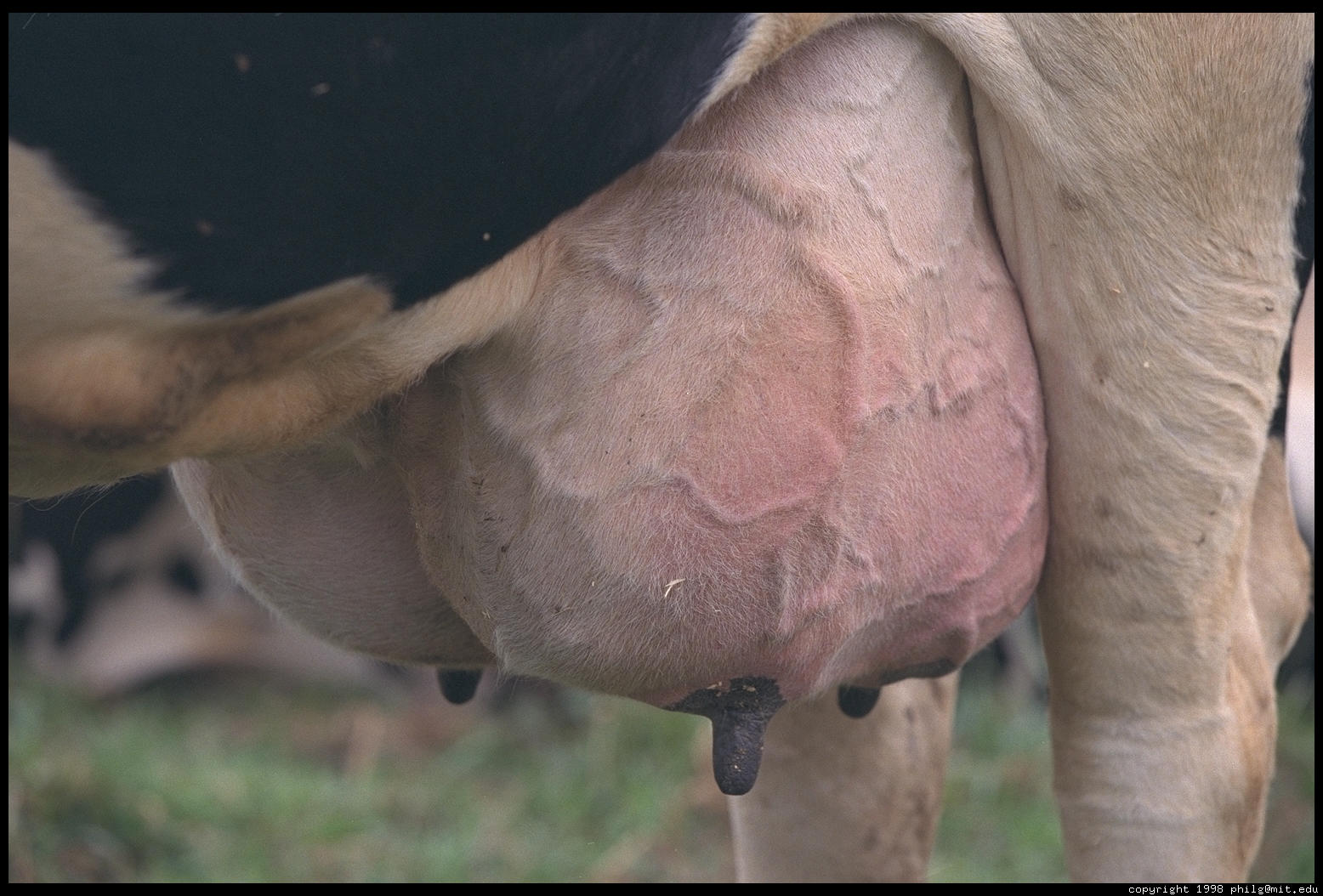
Breast is Best, breast is standard. Formula was designed as a medical option for infants who could not breastfeed either due to one of three extremely rare conditions or for the less than 2% of mothers who physically cannot produce enough milk or the less than 5% who, for other medical reasons, cannot breastfeed. Regardless of personal psychological response, the next best option for ALL babies, is the milk from another human mother. After all, why would we equate feeding our child milk produced from this:

http://advocacy.britannica.com/blog/advocacy/wp-content/uploads/cow-with-mastitis.jpg


http://philip.greenspun.com/images/pcd4554/cow-udder-38.4.jpg

As superior or even equal to the milk specifically created for this?:
Photo by of Blessed Life Photography

 Doesn't any healthy mother want the best for their child? So why don't we advocate more strongly to provide alternatives to the "fourth best" AKA worse, option to breastfeeding for mothers who either can't or don't want to nurse their babies? Why do we spend more time trying not to offend their choice to use the only option they believe is viable or obtainable instead of working to give them MORE options? Better options?

If you are interested in being a part of that option, click here to find out if donation is an option for you.


(1) Watch Your Language by Dianne Weissinger
(2) UNICEF, WHO, UNESCO: Facts for Life: A Communication Challenge. New York: UNICEF 1989; p. 20.
(3) Global Health Policies that Support the Use of Banked Donor Human Milk: A Human Rights Issue.
Further reading:
4. Enterobacter Sakazaki and other microorganisms in powdered infant formula
5. What Every Parent Should Know About Infant Formula
6. The Deadly Influence of Formula
7. Human Milk Banking
8. Nutrient By Nutrient Why Breast Is Best
9. Nutritional Information for Human Milk

Thursday, June 9, 2011

The Donor Milk Dilemma

Dripping Milk 4
Okay, hard truth first: Formula is not as good as human milk. Formula is rated fourth in the hierarchy for infant nutrition (Mom's milk, mom's pumped milk, milk from another mama, then formula) and should only be used for babies with galactosemia or any other reason that they cannot consume human milk.

Human milk is the standard of human infant and toddler nutrition. Formula is inferior, plain and simple. It has its place and can be useful, but it should not be the first option when breastfeeding/pumping cannot happen. If you cannot breastfeed, it does not follow that you must use formula.

Donor milk should be the first option after mother cannot provide the milk that baby needs. However, if you say that to most women, what is their first reaction?

"Eww! No way!"

Why? Why do we distrust other women so much as to assume that their milk is inferior to formula, when it was perfect for their own children? The risk of disease from donor milk is lower than the risk of formula contamination. But many women cannot be persuaded of this. Why?

"Women are dirty. Women's bodies are dirty."

This is a prevailing attitude in our society. It is illegal to show breasts outside your home, though men can show their nipples legally. It comes from puritanical thinking and the old "Eve committed original sin" attitude. Which is just plain ridiculous. It's the same reason that women think that childbirth must be a painful ordeal, despite the absence of pain in uncomplicated births in cultures that have not been exposed to this concept.

Women are adversarial to other women. They don't trust them. So, regardless of the fact that women go through the same STD checks in pregnancy and that donors are routinely screened, women refuse to accept that another woman's milk is clean. Sometimes, they cannot accept that another woman can do something that they cannot. Their competitive nature causes them to become resentful and aggressively reject that which they feel they cannot do.

Some women are so misogynistic that the thought of anything coming from a breast is 'dirty' -- even if it's their own! This is usually an attitude held by only the most immature mothers, though.

Many women tout themselves as 'victims' because they either made a choice not to breastfeed or were unable to, for whatever reason. But the real victims here are the babies, being given an inferior food substitute because of a cultural stigma against women's bodies.

Yes, some of it is the backlash of the medical germaphobe: 'all bodily fluids are infected with an unknown number of virulent diseases just waiting to pounce.' But even with that, there is still an imbalance, as formula is actually more bacteria-laden and research shows a greater risk of infection from it.
Refill for Will
I'm not saying women shouldn't have a choice. I am saying that formula should not be the first choice to follow. I'm saying that the cultural stigma against women needs to end. The hidden misogyny in our society needs to end. Only then can there be increased access to a variety of donor milk so that all babies who can safely consume human milk have access to it.

Friday, September 10, 2010

Supply Issues Without Bottles

Okay, so when we have serious supply issues, what's our first thought to do? Supplement. Sometimes it's with breast milk, sometimes with formula, but no matter which, the typical method of giving this supplement is counterproductive to breastfeeding: bottles.

So I'm going to show you another option, that will bring your supply up if you need to supplement. It's not as easy to feed as with a bottle, maybe, but it will not only make certain your infant is getting everything she or he needs, but also will raise your supply and cannot cause nipple confusion or nipple preference.


The Lact-aid. I've suggested this in the past, but it sounds complicated to people and really, it's not.

(image is of the Medela SNS from their site)

What is a lact-aid? It's a thin tube that supplies milk to the baby while he or she is latched onto the breast and suckling. What's at the other end of the tube varies. It can be a bottle with the nipple cut off or the hole enlarged, or it can be thawed bags of breast milk. The lact-aid tube can be held or taped to the chest for the Mommy-on-the-go (who is breastfeeding while doing other things--usually accomplished by having baby in a sling) or the Mommy who has a baby who might pull the tube out of his/her mouth.

How is it used? You simply get baby latched on, then slip the tube into the mouth, towards the roof of the mouth until the milk gets sucked up.


Here's
a video of a lact-aid being introduced. (it will open a video download window).

Lact-aids (or supplemental nurser systems, SNS for short) can be obtained through lactation consultants or a few websites, including through Medela.


I hope this offers another option to moms who are worried about their supplies, but don't want to introduce bottles, have had issues with nipple confusion/preference already or have babies who won't TAKE a bottle. And, with a little practice, it is just as easy as using a bottle--or easier if you're using pumped milk, as you don't have to transfer it from the bag you froze it in!

This is also a way that moms who just can't produce milk can give their babies formula and have the bonding and skin-to-skin contact that breastfeeding brings and babies need. In fact, it may stimulate a mom who had trouble making milk into making milk. Maybe not enough to fully feed off of (although that's a possibility) but every drop counts!

This is also an option for moms choosing to relactate to build up their supply faster than just pumping.

Here is a site with a few images of the lact-aid in use (and instructions how): http://lact-aid.com/rpt022.htm#positioning

And a site with SNS in use: http://www.breastfeed-essentials.com/accessories.html#SNS