Showing posts with label breastfeeding. Show all posts

Tuesday, October 2, 2012

Fall 2012 Updates


Well, in lieu of a more interesting post this week (you are still fascinated, I'm sure), I'll give you updates on what's going on here (aka: why I have not had a lot of time to blog).

Our 10 year old kitty got very sick and almost died--
kangaroo care for a kitty brought her back!
Yes, Brat is in the sling with the baby sleeping next to her.
 First, you can blame Facebook above all else. It fires my dopamine receptors like no one's business. 


Next, my kidgets: Lilly has got the whole 1-10 addition down and is doing pretty good up through 15. She loves word problems for subtraction. She will have me knock them out (and I have to use objects for visual reference, even though it's verbal) while we're driving to the store, etc. Finally, on the math front, she's started multiplying small numbers. I just decided to throw out a couple of equations and the girl pwned them.

She's reading faster and larger words with more ease and her favorite subject is still science. Particularly anatomy. A quote from the other day was, "We have a human heart on our wall!" Because we have a printout of a human heart that's all labeled. She loves the circulatory and digestive systems.


Naomi is her usual crazy, creative self. She draws almost on parallel to Lilly and far ahead of where Lilly was at this age. I love her little people and her pony the other day was super cute. She still swings madly between being uber adorable and doing her best imitation of someone locked in a mental institution off their meds. She has her Renfield moments, too--the kid is obsessed with death right now. What is it with 3-4 year olds and death?

Oh, yeah, and I took up hooping
 Katarina is walking! She started just a few days before she turned 10 months old. She says mama, mom, dada, dad, hi, KitKat, cat, Brat, up, this, that, what and random other adorable little sounds that may or may not be words. She signs milk and claps delightedly for milks. She loves to give her family hugs and blow raspberries until the cows come home. She's got more dance moves every day and recently discovered dubstep.

She also knows how to turn on the XBox and loves playing around with the controller. She'll bring it to me to turn on 'baby show' and dances and claps when I turn it on.


As for me... I finished Pet, my second novel (sequel to Hotel of Lost Souls, which is to be a trilogy, apparently) last Tuesday (September 28th). I'm in the editing phase as well as writing the third book, Bridges. I made it about... well, one sleep cycle and six hours awake before I was writing it. Pet took me a total of about 9 weeks, although there was a break of over a year while I grew, birthed and nurtured a new human life.

Oh, and I nursed hands-free for the first time
in a baby carrier!

So, that's why I'm a bit quiet over here. The blog wasn't getting as many hits as it used to and I figure everyone else is busy, too. Or there just hasn't been enough controversy. Whatever it is, all these things combined to take me down from 2-3 posts a week to 1. I'm still here and going strong, but my typity-typity has been directed in a more focused fashion!

Friday, August 3, 2012

Modded Mama


So, let's step away from hot topics (I think!) for a minute and talk about one of my favorite topics: Body Modification. Lots of people have opinions on it and one out of five Americans has at least one tattoo (40% of people born between 1966 and 1980 have them). The number of people with at least one piercing is much, much higher (73%-83% of women alone have their ears pierced).

Many of my friends have tattoos. Their reasons range from just liking the picture they chose to a deep story about each one. I fall into the "each of my tattoos has meaning" category, personally.

My first tattoo took me 10-11 years to decide on
I don't remember when I saw my first tattoo, but I do know that by age 10, I wanted one. By 11, I was thinking hard on what I actually wanted to permanently etch into my skin while applying fake tattoos left and right. Music was an incredibly important part of my life, as long as I can remember. From my first desire to be a drummer at 3 to my desire to be a rock star by 5, the only thing I cared more about was being a mommy some day.

So it only makes sense that, eventually, the first tattoo I would get would be a band tattoo. Stabbing Westward helped me through some of the hardest parts of my life--the parts I almost didn't survive. Shortly before seeing them onstage for the first time, they put out an album with a symbol for the band that I thought looked great and thus, my first tattoo was born. I scanned the symbol, recolored it to my favorite colors and after an hour and a half, I had ink!

Yes, my boobs are huge--I have macromastia--you're
supposed to be looking at my ankle
When I planned to meet my husband (then, long distance boyfriend) for the first time, one of the things he expressed to me was a desire for his own tattoo. So, our first date, we went to my tattoo parlor and he got his first and I got my second tattoo. An ankh--a symbol of fertility and the afterlife. Now, if I get decapitated, they know to let me live forever anyway.

I drew this tattoo myself. I was not pleased that
the artist didn't redraw it and I would like to get it
touched up to a nicer design. This is 8 years later...
In 2010, my husband's gift to me for Mother's Day was my third tattoo. We met on a Star Trek: Voyager list and the words "Voq Je bang" along the bottom are Klingon for "truth and love." I designed the tattoo myself, right down to drawing a map of my favorite constellation, Orion (which, when the design was blown up, wasn't centered right, but that's okay, I love how it turned out) and each star represents a member of my family.

Yes, nerd glasses--Lilly and/or Naomi snapped the stems off


Of course, tattoos aren't the beginning and end of body art! I currently have 8 piercings, comprised of 9 holes and I've had my lip and tongue pierced in the past, but they are retired (my tongue reacted badly and my lip started driving me nuts when Lilly was a baby, from clicking on my teeth).


Now, onto some commonly asked questions from moms:

Is it safe to get a tattoo or piercing in pregnancy?

Not really. Overall, your risk is very low of getting a disease from a tattoo parlor (all metal equipment should come from sealed autoclave bags, opened in front of you; ink should be freshly squeezed into new little cups and the artist should be wearing gloves at all times), however, that risk still exists and therefore, you shouldn't put your baby at risk for something that can wait. If a tattoo can't wait 10 months, you shouldn't be getting one. These are forever. Don't go into it thinking "I can just get it removed," -- tattoo removal can be painful, can leave massive scars and is expensive. If you're worried you won't want to do it in 10 months, you shouldn't do it at all.

As for piercings, let me start by saying don't ever go to a mall piercer or anyone with a piercing gun (read: glorified stapler). I've never had a problem with the four I've had gunned that I didn't have with a needle, but that doesn't mean you won't. The problem with getting pierced (and this applies to tattoos, too) during pregnancy, aside from the risk of infection, is that your healing factor is greatly reduced during pregnancy. This increases your risks of infection, rejection and will considerably lengthen the healing time. This is another procedure that can wait.

Do I have to remove my navel piercing while pregnant?

No. There's a whole website devoted to the pierced, pregnant mama. You can get a flexible bar made of PTFE. Unless you experience discomfort or severe migration, you should be able to stay pierced right up through baby's arrival.

What about my genital piercing?

Yes, those should be taken out, sorry! Generally, you will not tear up through the clitoral hood, but it has happened and the swelling will greatly affect labial piercings, as will any tearing (if it occurs). You can keep them in right up until you think you're in labor or toward the end, if you like, but when it comes to actually giving birth, most providers (OB or midwife) prefer them to be removed for your safety. Some women just use a longer bar for hood piercings, but again, this can be a risk and in your postpartum time, it will just be easier to care for your vulva without them in.


Can I breastfeed with nipple piercings?

Well, that's more of a personal choice. Most women certainly can! Some say it helps their milk flow, even. Typically, piercings should be removed during the nursing session for the baby's health. Bacteria can live on the metal and more, it isn't going to be comfortable in his or her tiny little mouth. Some babies are little hoovers and if you have a CBR/BCR, there could be concern for the baby sucking the ball right out (or if your barbell balls are loosened--I've had plenty of barbells fall out because somehow, the ball got loose and I have to regularly check the tightness). Some remove them during the whole nursing relationship and re-pierce them after and some simply remove them before each nursing session. It's up to you! Beware the twiddler baby, though--shiny objects attract babies and if you don't like having yours tugged, that can be a problem!


To the non-modded audience members, remember: look, but don't touch! Appreciate, but don't demand a story for every tattoo you see. Yes, these are problem behaviors--just as most mamas don't like having random strangers come up and touch their baby bump, most people with tattoos don't want you to come over and start touching them, no matter how awesome you think their ink is. The people who have very large, prominent tattoos don't always, as is the common myth, do it for attention. Most are simply an idea of beauty, art and/or personal expression. Sometimes, even when the tattoo is visible, that is private. So if they want to tell you their story, that's great, but let them offer.

Are you Modded Mama (or Dad)? Feel free to talk about it here and show them off!


Note: I will not address non-consensual body modification procedures such as infant ear piercing other than to say that I do not support anything that infringes upon the bodily integrity of another without their consent.

Thursday, May 31, 2012

Nursing Naomi

originally published Jul 17, 2009 at 12:49 AM on Cafemom

I just wanted to get down the story, it was bouncing around my head as I was nursing her a little bit earlier....


So, nursing Lilly was/is pretty much a breeze. Sure, I had difficulties with pain, frustration, etc. until I was just about crazy with it all and only my determination kept me going, but I never once regretted nursing, not even when I was exhausted and in pain and afraid she wouldn't sleep and would wake me up and want to nurse on my sore side. I knew I was doing the best for both of us and just like I was promised, it got better. One day, it was like some magical switch flipped and the bad parts were just a fuzzy memory. But with all the issues, they complimented each other. She had a terrible latch, which should have made her not get milk, but her suck was so strong and my breasts were so eager to release their milk that she never wanted for any.

So, when I got pregnant again, I was confident with experience under my belt that I could face all the challenges coming my way. I had talked to moms with horrible nursing stories that ended poorly and thanked my lucky stars I hadn't had those problems.

Then I had Naomi. She was so sleepy that it was hard to get her to stay awake long enough to try to nurse. When she did finally nurse, it was weak and with a bad latch. Since I have large breasts, I can't feel letdown, so I had no idea if she was even getting milk. She tried to nurse maybe five times while we were at the hospital and lost less than her sister (who was in the hospital for three days instead of the one Naomi was there). The nurses knew I'd done well with Lilly and never brought up formula, even though I hadn't had a chance to tell them not to.

When I got home, I started getting worried... and then my husband went back to work only a few days post-partum. I was alone, tandem nursing my babies and getting worried about my little sleepy baby with the weak suck. She started arching, screaming and getting so upset she couldn't nurse at all.

Well, I was determined, so I broke down the problems into smaller problems. First, she needed to eat. She couldn't do that if she was screaming, so I went with Dr. Karp's 5 Baby S's before each feeding. I'd shush very loudly when she was crying at my breast and it would stop the crying instantly, she'd find the nipple and try to nurse.

Her mouth was so small and my breast was so big! I used the C-hold to overcome this, as it had taken me a long time that it was okay to do with Lilly. It is how I'm used to nursing. Those big boobs needed to be manageable for us both. Hands-free nursing is for side-lying an older baby or toddler at my size and I'm fine with that! The people teaching you to nurse make it sound like a rolled towel/blanket will solve everything when it does nothing but add an unnecessary, obnoxious step in the nursing process (at least, for me).

I worked on her latch/suck by having her suck on my finger, which she had no issue with (and which told me that bottles would be deadly to our nursing relationship, because they would be so much easier for her and she needed to learn to nurse what she had) and then quickly pull my finger out and offer the nipple. It took a week of doing this before I was able to stop, but it was successful in improving her latch and suck and she was growing strong and healthy, though it was her diapers I had to rely on to tell me that she was getting enough--she had about 12 wets a day, I knew she was doing good!

Nursing hurt my baby, because of my letdown. It was too hard for her. I tried having my toddler take the brunt of the first letdown, but that didn't help (it did, however, make it easier for baby to stimulate letdown in the early days when she was having trouble with her suck, to have her sister get it going first--I suppose I'd have hand-expressed, since a pump doesn't work for me, if I hadn't had Lilly to get things going... DH also volunteered, lol, bless him, he never got that opportunity ;) I needed time to heal!). She was textbook colicky, but I don't believe in untreatable colic.

Since the Baby S's couldn't work this problem out, I decided to assume it was gas and treat it accordingly. But when looking for the baby Gas-X, I found Hyland's Colic Tablets. They said that they were also helpful in relieving the pain from overactive letdown. I decided to give them a try.

It was like a miracle. The baby who had started arching and screaming at the sight of my breast was given two tablets and a few moments later, after I shushed her calm to latch, she was sucking--and all signs of pain vanished! Within a week, the arching/screaming cycle stopped! I forgot about the tablets and it resumed. I resumed them and it was gone. I would need them until she was about 3 1/2 months, but by then, all the other issues were long resolved.

My magic switch actually happened earlier with Naomi than it did with Lilly, at 6 weeks (Lilly's was 7 weeks). But I never would have made it if I hadn't been determined and believed in my body's ability to nourish my baby. There is little more heartbreaking than your baby screaming in fear at the sight of your breast, like you're trying to hurt her. I know that with her delicate stomach, anything else would have been even worse.

If I hadn't had the support and research I'd had for the past two and a half years, I don't know that I could have made it. Not knowing if my baby was getting enough and it looking like she couldn't possibly be getting any--but there were the diapers. There, I was reassured. Having my baby not know how to latch instinctively--that was terrifying and I was so depressed, I couldn't even bring myself to ask for help. I just kept going, doing what I'd been told should work and believing in it. Having her scream and arch--if I hadn't had the Happiest Baby techniques, I couldn't have got her semi-calmly to eat. The obvious signs of pain? I had to go with my gut and try something new (the Colic Tablets) and I was validated.

It was a hard start and with the depression, I also had serious bonding issues with my baby. But we persevered. We did it and I'm so proud to still be nursing Naomi. I wish I hadn't been so depressed I couldn't bring myself to call my friends for help when I desperately needed it, but I still did it because I believed. And I have no regrets and a good bond with my baby, as delayed as it was in coming. I'm so grateful for the friends I've had and the support I've had and the resources available to me.


Addendum: Naomi self-weaned at 2.5 years old in July of 2011. It may have been partly influenced by pregnancy, but I offered and she refused for about a week or two before I stopped offering and realized that she was done. I am happy with our nursing relationship and the natural end it found. I am sad that I have no pictures of her nursing after she turned 2.
A Little Bit of All of It Preparing for Birth Series

Friday, May 11, 2012

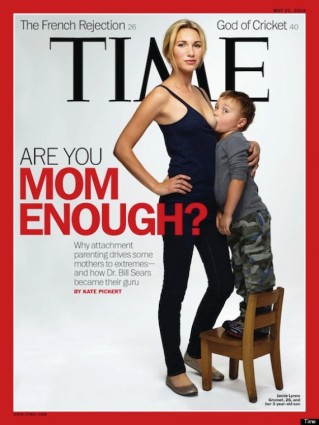
Musing on the Time Cover and Attachment Parenting


Everyone else is, so I guess it's time to blog my bit as well (Bridge? Why that one looks quite lovely to jump from!). I've been posting other bloggers' articles all day (thinking I wouldn't want/need to write this) and I think I'll start with linking to some of my favorites (just because you aren't here doesn't mean I didn't love your article--it might just mean I haven't had a chance to read it yet!):

First, the interview with the cover model

An interview with my friend, fellow (better) bloggess and one of the other mothers who was in the photo shoot

Her post on Huffpost.

Another interview with said friend:


An article by Daniél at Three House Wives


An anthropologist's take on the issue.

This article by Phil Giannotti on Attachment Parenting.

This post was originally a facebook status before being expanded, by the wonderful Lindsay!

This photo, taken by The Heady Housewife, shows that the cover image is a kind of optical illusion, making the boy look far older than he is. Her son in this picture is younger than two years old:


Tales From A Kitchen Witch shows that Time perpetuates a sizist notion of beauty:


A response to the title by hobomama.

What about the Daddy Wars? Charlie (awesome lady I'm proud to know) writes.

Interview with Mayim Bialik, one of my favorite attached celebrity moms:


And a response on FB via photos that I enjoyed (which is where the cat picture at the top came from as well):
 
Now, the article was supposedly on Attachment Parenting. I don't know, as due to their tactics, I have no interest in buying the magazine and supporting the fuel they've added to the "Mommy Wars" that simply should not exist. Instead, it's all become about breastfeeding and specifically, full-term (also known as 'extended', but I don't like that term as it implies that it is abnormal when it is the biological norm) nursing because of the cover.

So, people are talking. Some of it is good, honest curiosity. Like the majority of moms, I had no intention of nursing a three year old, much less a four year old! My initial plan was to nurse for a year or so, then give my toddler pumped milk in a sippy until she was two. Ha! First, I don't respond well to the pump, so it's from the tap or almost none at all. I thought it would be weird to nurse someone who could talk about it. Then I got the first, "Mmm, ice cream!" and all of that went away (I was eventually informed that the other produced fruity milk while the ice cream breast tasted like various confections).


Like Dionna said (and I've said and many other mothers have said), you don't wake up one day and have a two year old (well, you do, but that kidlet doesn't look any different than she did the day before or the week or month before). It seems strange, looking down at a twelve month old and knowing that some people think that's too old to nurse. That's a baby! I didn't even notice a difference in nursing a one year old versus a six month old, or an eighteen month old versus an eight month old.
My opinions slowly changed as my baby aged and I became more comfortable with nursing (I once thought I wouldn't be able to bear to do it at all), being a mother and the biology and science of it all. As I became better educated, was more exposed to other nursing mothers and watched my children grow, I knew that all that I thought I'd 'known' before just wasn't so. At least, not for me and my family.

We practice child-led weaning. From solid introduction (where the baby feeds herself based on signs of readiness) to the end of nursing, I follow many cues. With Lilly, the final indication that our relationship was ending was her losing her latch. She couldn't get milk and I had an aversion to nursing her. We talked about it and she stopped. It was more mutual than child-led (Naomi weaned on her own a few months later--I kept offering and she just slowly stopped). 
From baby
to toddler
to our last nursing photo, when she was 4
(Sadly, I don't have any photos of Naomi nursing after she turned two--I had camera issues during that time and was busy writing a book and gestating Katarina)

What are the benefits of nursing a toddler or preschooler? Much the same as nursing a baby, only to different degrees. Nutrients in milk becomes more concentrated as Mom's body senses the child's increasing needs and becomes extra loaded during natural weaning, preparing the child to be on his own, immunologically and nutritionally. It's not full nutrition anymore, but more like a dose of vitamins with immunity information in the stem cells. It's still comforting, reconnecting and contrary to popular old wives' tales of the day: it encourages healthy independence. There has been no upper age limit found on the benefits of nursing--they continue stacking. You can read more here.
The age children reach independence (not true independence, of course, as for that, you have to be able to hold down a job, pay bills, etc. -- you certainly can't expect independence from someone who can't wipe their own posterior!) depends on the child. Their personality plays a lot in it, but studies have shown that nurture is also very important. A child whose needs are consistently met is more confident and secure in their independence. They also may reach it sooner (but I think that has more to do with temperament--a clingy baby is likely to be a clingier child regardless of nurturing). I have two very independent little girls and I do believe my parenting, which nurtured attachment and respect has a lot to do with that, particularly with my oldest.

As for Attachment Parenting--what is it? Well, it's about creating an environment for your baby that supports healthy attachment (hence the name). It is the 7 Baby B's, for starters. But that's just a rough guideline, not some set of rules. A mother who cannot nurse can still easily practice attachment parenting. As can parents who do not feel comfortable having baby in bed with them (cosleeping in a crib is a wonderful second choice!). Also, mothers who cannot handle the strain of babywearing on their body, for whatever reason. It's not a competition. It's not a club. It's simply based on the most natural ways to care for a baby that supports the health (physiological and psychological) of an infant, toddler, etc. 

Technically, full-term nursing is not even a part of attachment parenting! It's a part of Natural Parenting, which is complimentary, but not the same thing. Cloth diapering, elimination communication, baby led solids/weaning, etc. are all Natural Parenting and not AP--they are lumped together because they are agreeable. You can read more about what AP is not here.

I am so sad to see that people are flocking to denigrate parents who are simply trying to follow their instincts and do what they feel is right for their family. I am sad that the "Mommy Wars" even exist or that so many people seem so quick to join the ranks and take up arms. I hope that people can put aside their prejudices and try to use this as a learning experience instead of falling into cultural xenophobia.

We need our sisterhood back, as mothers. We need to remember that which connects us all as mothers: love. 

Saturday, May 5, 2012

Musing on Elimination Diets

Ahh, the elimination diet. The first thing that many moms suggest when someone's baby has so much as a painful toot. We Americans are obsessed with food. Some with eating it, some with not eating it. It's become the most popular trend in 'crunchy' circles to blame everything on food and insist everything can be cured with it. A lot of people have great success and improved health discovering what they are intolerant or allergic to and removing it from their diet and that's great. Others seem to be nothing but miserable and even unhealthier while on their special diets and eventually abandon them for their sanity.

This has trickled down to babies at the breast. For some babies, an elimination diet is a lifesaver--both for the baby and his parents! However, when it's the go-to for pretty much any upset tummy or rash, are we doing more harm than good?

Courtesy stockxchng

Many studies have come out in recent years that suggest that our clean, sterile environments and avoidance of allergens may be contributing to (or causing!) our poor health here in the US. For instance, a study of babies who ate peanuts earlier in infancy vs. those who wait until after a year as guidelines have recommended showed that the babies with earlier exposure are less likely to be allergic to peanuts! Autoimmune diseases are being linked to clean (sterile) environments, calling for an end to things like Clorox wipes. Pets, once considered a cause of childhood allergies, are now suggested to actually reduce the risk by over half (and kids raised on farms have less allergies, too).

Children learn about the local diet that they are going to be eating through amniotic fluid that they sample in the womb and the milk they drink at mother's breast. It makes sense, then, that places that have diets heavy in fish, such as Japan, have nearly no fish allergies (something I envy, as salmon, tilapia, sardines and several other fish all slam my throat shut like an angry teenager's bedroom door) and announcing you have such an allergy leads the people there to wonder how you can even live, as surely, you must starve if you can't eat fish! So, what does it do to a nursling's expectation for a mother to drastically change her diet to something that does not reflect what the child will grow up eating (or eat when grown up)?

courtesy stockxchng
Now, moving past studies into my own personal experience. My first daughter, Lilly, had a lot of gas. "She could toot so loud," I joked, "that the neighbors blamed the dog." Her poop was nuclear green and on and off frothy. She spit up a lot. A lot. There were few to no signs of pain, but still, I thought that I didn't want my daughter to be ill, so I considered a dairy elimination. Then I considered all the new information about exposure being related to a reverse allergenic response and I decided to try the opposite: I increased my dairy consumption. Of all things, her symptoms disappeared.

I should note that at the same time, I also started adjusting for my overactive letdown/oversupply. Her poop remained green (I did not produce much foremilk, however, I believe due to my poor hydration habits), but she still had no signs of pain, the frothiness disappeared and the gas even took a step back. So, clearly, her problem was not dairy.

With my second, I didn't even think of food allergies when confronting her myriad of nursing problems. I got through them all without ever touching on the subject.

With my most recent, Kat, again, I was looking at a baby who had the symptoms of a dairy intolerance (these, by the way, are also the symptoms of overactive letdown, which is a known problem for me, so I took that into account). When blood appeared in her green, mucousy stool and she cried in pain at every bowel movement (and quite a few toots) while breaking out in an unexplained rash, I decided that I would try an elimination diet.

While I was doing this, I also worked on my overactive letdown and started pumping off some of my early milk to slow the flow (and noted that my foremilk/hindmilk was well balanced). I also forced her to block feed (she was quite opposed, but eventually allowed me to do this). The blood vanished from her stool and it started appearing seedy and turning butter yellow while losing the foul smell.


For the rash, I took all of her clothes and rewashed them in the detergent that I use for myself (Era). Voila, the rash disappeared (it recently reappeared and now I believe it was either a reaction to cinnamon or clove, as that was heavily present in my diet when the first rash appeared as well as the new one--but she also tried on clothes that were washed in the original rash-giving detergent, too! Oy!). Her diaper rash problem was solved by adding baby powder to our diapering routine.

My elimination diet was a failure, however, as I did not realize that my coffee creamer had dairy in it! I had switched without checking, as the other creamer I had been using was dairy free, so it didn't occur to me. None of her symptoms remained or returned when I reintroduced regular dairy back into my diet.

With Kat's symptoms, an elimination diet was even recommended by my pediatrician and was most definitely warranted. However, it turned out that it was not caused by a food allergy, but rather, my milk ejection reflex and laundry detergent. Had I only attempted the elimination diet, she would have continued suffering.

Right now, it seems that the first (and often only!) answer given to any nursing mother with a baby displaying digestive issue symptoms is to eliminate food. Dairy, soy, wheat, corn, eggs... there are lists available to check off one food after another in an attempt to find what's wrong with the baby. Personally, I think that LCs (no matter how many letters precede those two) need to remember to bring up other common problems as well. "Food sensitivities in breastfed babies are not nearly as common as many breastfeeding mothers have been led to think." -- Kellymom.

Elimination diets are a great tool for babies who truly do have sensitive systems, but more than simply gassiness or fussiness must be present before we go recommending that Mom cuts out what may be one of the primary sources of protein for her (we're talking milk, cheese, yogurt--all of that and more, for a dairy elimination). A dairy intolerance is not 'lactose intolerance,' but rather, difficulty processing cow milk protein.

First, as far as straining and pain with passing gas and stool: babies have to learn basically everything. That includes how to fart and poop. They do not know how to relax their sphincter and often get in their own way attempting to simply eliminate. This can cause pain and frustration. Typically, it's outgrown after a few weeks and they learn to relax instead of fighting to have a bowel movement or pass gas.

Green poop: This can be a sign of a lot of things, from allergy to letdown to hindmilk/foremilk imbalance. All of these should be considered. Blood in the stool can be caused by all of these problems as well. The position in the stool tells you whether it's internal (inside the poop, meaning it got there before being passed) or anal (outside the poop--caused by anal fissures from straining).

Symptoms of food intolerance include: fussiness and crying for extended periods, sudden waking accompanied by cries indicating pain, rash (particularly a red ring around the anus--how I identified a food allergy to strawberries in my first and spinach and broccoli in my second), hives, eczema, congestion, vomiting and unusual stools (green, mucousy and/or bloody). These area also all symptoms of other problems, so experimentation may be needed.

If baby displays these symptoms within four to twenty-four hours of you eating a new food, there's a good chance that baby is experiencing a reaction to the food. Usually, symptoms will pass within a few hours if it is a new food. Symptoms that are ongoing indicate a regular food in mom's diet.

In closing, my thoughts are that while elimination diets have their place, like any other treatment or tool, they can and are being abused by well-meaning mothers and their breastfeeding counselors. I think that starting an elimination diet without real symptoms (just over normal baby developmental issues) is not the best idea and may actually be doing baby a disservice when it is used as a first recourse. 


I am not calling for an end to elimination diets--far from it. Babies who are diagnosed 'lactose intolerant' (a pet peeve of mine) or 'allergic to human milk' (flat out impossible, however while galactosemia and similar conditions obviously exist, they are not an 'allergy') would definitely benefit from mom figuring out what it is in her milk that is causing the reaction. And mothers are good at identifying that something is 'wrong' (far better than society gives them credit for). These are just my observations that I wanted to share as an alternative 'food for thought.'

Did an elimination diet help your baby? Did you try one and have it fail? Did you wish that you had been given more options?

Friday, April 27, 2012

Musing on Unlawful Removal From Businesses

The following is expanded from journal posts made over the course of the two days following the incident.

 
On Sunday, January 13, 2008 at around 4:45 pm, my rights as a breastfeeding mother were violated. I was shopping at Hot Topic with my Christmas money and had collected a few items to buy (including a couple of kick ass onesies). Lilly was toddling around and slipped. She banged her head on a shelf and started crying. I tried to calm her down, but she was flipping out and wouldn't sit back in the stroller, so I sat down amidst the clearance shirts I was already looking at, out of the way of other customers, and started nursing her while continuing to shop.

I had her head basically in the shirts and my shirt was covering every bit of my breast as well as a bit of her face. I was the picture of 'discreet,' sans a nursing cover (which I had tried in the past and ended up flashing an entire store... I could not nurse in one without flashing, so I stopped trying to use them, as I found myself to be more discreet simply using the bottom of my shirt).

An employee walked by and smiled at me and said hello. My husband was looking through the band shirts for me while I continued to browse the clearance. A minute later, the same employee came back and informed me that I couldn't nurse in the store. I calmly explained that that wasn't true and that the law states that anywhere that I am allowed, my baby can eat.

"Well, we've already had a customer complain," she insisted. We were three customers!

"That doesn't change the law," I told her and she left to talk to her manager. Another minute or so passed and then the manager (turns out she was only an assistant manager, but she was the authority in the shop that day) came over to squat next to me on the floor.

"You can't expose yourself in public," she began and I looked down. All you could see was my baby's hair and my shirt. Not even a millimeter of breast was 'exposed.' My gaze drifted over to the pregnant teenager across the aisle, whose breasts were on full display. "Hot Topic is a private store--"

"There is no such thing," I replied, adrenaline flooding my system from the emotions burning inside me. She thought her store was above the law?

"You can't just squat down and breastfeed," she snarled. I was sitting in the exact same position I had been to reach the bottom shelf of shirts, which is only an inch or less off the floor, with some spilled over from previous searching customers. She continued berating and lecturing me every time I tried to quote the law and eventually she dropped the word 'indecent' and we degraded into a full-out argument. I was furious, embarrassed, feeling harassed and my mind went to the teen, worried that this was her first nursing in public experience and it would give her an incorrect view of her rights as a mother. The manager refused to give me her name, though I asked repeatedly.

Finally, Lilly stopped nursing and started staring at the woman yelling at me. She didn't notice and was telling me to leave, over and over. I just gave up on her and asked if I could buy my merchandise on my way out. She told me that I could and I got into line, but it wasn't over for her. She broke my last bit of control when she sneered that I was wrong and couldn't go around exposing myself in public. Previously, she had been speaking softly and insisting she wanted this to be a 'private matter.' This comment was loud enough for the people around to hear.

I turned around and yelled at her that my rights were being violated, that the law was on my side, etc. Somehow, I had managed to avoid calling her 'ignorant,' 'stupid,' and 'prudish' (words popping into my head) although my mouth was running beyond my control, I was so angry. She called mall security and told me I could no longer purchase my things and that I had to leave. I threw my clothes back at a shelf and accidentally hit her with the onesie. Oops (really--I didn't want assault charges, I just wanted out of there at that point and didn't want them to think I was trying to shoplift).

She then started saying "You need to leave, now!" over and over, while I was insisting that I was trying, but she backed me into the line of customers and rammed my stroller into a nearby customer, at which point, she seemed to notice that she was preventing me from leaving. So, she announced "Everyone move, she's leaving!"

An old woman was smirking at me and my husband told me that he was pretty certain she was the one who had made the complaint. It was bad timing, as then I turned to her and called her a fucking bitch. She stopped smirking. We left and mall security never showed up, so I bought a calendar on the way out that I'd been eying.


I went home and journaled about it on Cafemom. Information flooded in from supportive moms who were outraged and cries for a nurse-in began. An ex-manager for another Hot Topic quickly contacted the company and provided information for me (and others) to do the same. Before I knew it, the Vice President of Hot Topic, Ed Gusman, had joined Cafemom for the express purpose of trying to contact me (I was busy taking care of my baby, unaware of the storm I had set in motion with my journal).

My husband was shocked and angered by the whole thing and he contacted Mr. Gusman on my behalf. I sent Mr. Gusman an e-mail with the details of the incident and this is an excerpt (I shared the letter in its entirety in another journal post):

"I felt humiliated, angry and discriminated against. These are not feelings I ever expected to be subjected to in Hot Topic. In fact, they were very much against what I have always believed Hot Topic stands for. I am hurt and cannot believe that I was put through this, simply for trying to exercise my legal right to nourish and comfort my little girl."

I pointed out that had I been offered the changing room to nurse in, while it still would have been a violation of my rights, I would have used it without confrontation. The problem was that I was told to leave just because I was nursing. I then went to include the law for my state in my journal:

Breast-feeding in public permitted.
191.918. Notwithstanding any other provision of law to the contrary, a mother may, with as much discretion as possible, breast-feed her child in any public or private location where the mother is otherwise authorized to be.
(L. 1999 S.B. 8 & 173 § 6)

I received an e-mail reply almost immediately.

Dear [my name here],
Thank you very much for bringing this to my attention!
I am very concerned about the situation you’ve described and am investigating the matter now. 

I would very much appreciate the opportunity to learn more about your experience. 

My husband called the number Mr. Gusman attached to the message and before 24 hours had elapsed from the time of the offense, everything had been resolved. Ed asked to talk to me and apologized. Before he was removed from Cafemom for being a man, he read up on breastfeeding and was wowed by the amount of information available.

I was entirely impressed that he chose to educate himself not only on the laws, but the reasons women choose to nurse and the importance of breastfeeding. He asked me what he could do to make it up to me and I asked that sensitivity training be provided for all management of Hot Topic stores as well as education on the laws, to prevent this from happening to anyone else. He readily agreed.

He was clearly baffled that that was all I wanted and when I didn't ask for anything else, he offered to send me a gift card to purchase the items I had been forced to abandon. I let him know that while that wasn't necessary (as all I wanted was for this not to happen again), I appreciated the gesture and told him what I had been planning to purchase (he did send the gift card).

The response I received was more than I ever could have hoped for. Hot Topic's actions should be a model for any store in this situation. Not only did they avoid a scene (and becoming a hot topic they never intended!) but they left me a satisfied, returning customer. The assistant manager who treated me so poorly was subject to disciplinary action and the head manager sent me a written apology and invitation to the store (I did not go the day he asked, not wanting to be a spectacle).

I did buy the items that had been in my 'cart' -- ironically, one of the shirts was this one (which showed far more of my breasts than I did while nursing):


Unfortunately, upon my return, the employees did whisper about me and watch me like some negative celebrity, but that only happened the first time I returned. The incident was forgotten after a while and I still shop there (I don't recall if I've nursed there since the incident--I only nurse in public when my baby clearly needs to).

This incident was traumatic for me and my heart goes out to every mother person who has been refused service or kicked out of a place for nursing any reason when they were only trying to patronize the establishment. Discrimination is a cruel thing and needs to end.

Tuesday, January 31, 2012

Infant Feeding Hierarchy and Terminology

This post was originally published Feb 16 2010 on cafemom. I'm posting here and now because I'm sorry that I haven't posted this month and it's my apology. Having a newborn and two older kiddos is time-consuming!


As I write this, I realize this is a touchy subject for some. First off, understand that this has nothing to do with the choice you made or had made for you (I have formula feeding friends and no problem with that) nor you as a person; this is only about the substances involved. If you are here to start a debate, please stop reading now.


Fist, we've all heard "Breast is best." That's a universally accepted truth, right? No. Too many people misunderstood that message to think that breast milk must therefore somehow be something more than the norm, so the message has been changed to, "Breastfeeding is the standard."(1) However, even using the original message, we can come to the same conclusion--that cow or soy based infant formula is an inferior feeding method. The formula companies acknowledge this freely (usually when defending themselves in court) despite their advertising. 

So here's we're going to explore the "Breast is Best" language. Best, as we know, in the "good" hierarchy, is the top. It is better than better, which is better than good. Well, infant feeding has a hierarchy as well. (2) It is listed as:

1. Milk at the Mother's Breast2. Mother's Pumped Milk in a Bottle3. Donated Milk from Another Mother
4. Infant Formulas


So, using this, we can apply it to the language hierarchy in which the word "Best" appears. This would mean, mimicking the list above:

Best: Milk at the Mother's Breast
Better:
Mother's Pumped Milk in a Bottle
Good:
Donated Milk from Another Mother
... :
Infant Formulas

Well, what comes below good? Well, automatically, we would say that going down the same catalog, what would come next is either "worse" or "bad" (considering that bad takes the place of good in its pyramid, then is followed by worse and worst). However, I think we can skip the first, but to avoid applying "worst" to the next in the list, let's expand it.

Best: Milk at the Mother's Breast
Better:
Mother's Pumped Milk in a Bottle
Good:
Donated Milk from Another Mother
Worse:
Infant Formulas
Worst: Cow's milk


So, the same conclusions are drawn from either terminology. Even if Breast is Best, that does not make formula "good" or even the next alternative. Although this is the not the first journal to create this hierarchy, another (3) is in reference to preterm infants, which actually lists formula as worst:

 Object name is 1746-4358-1-26-1.jpg
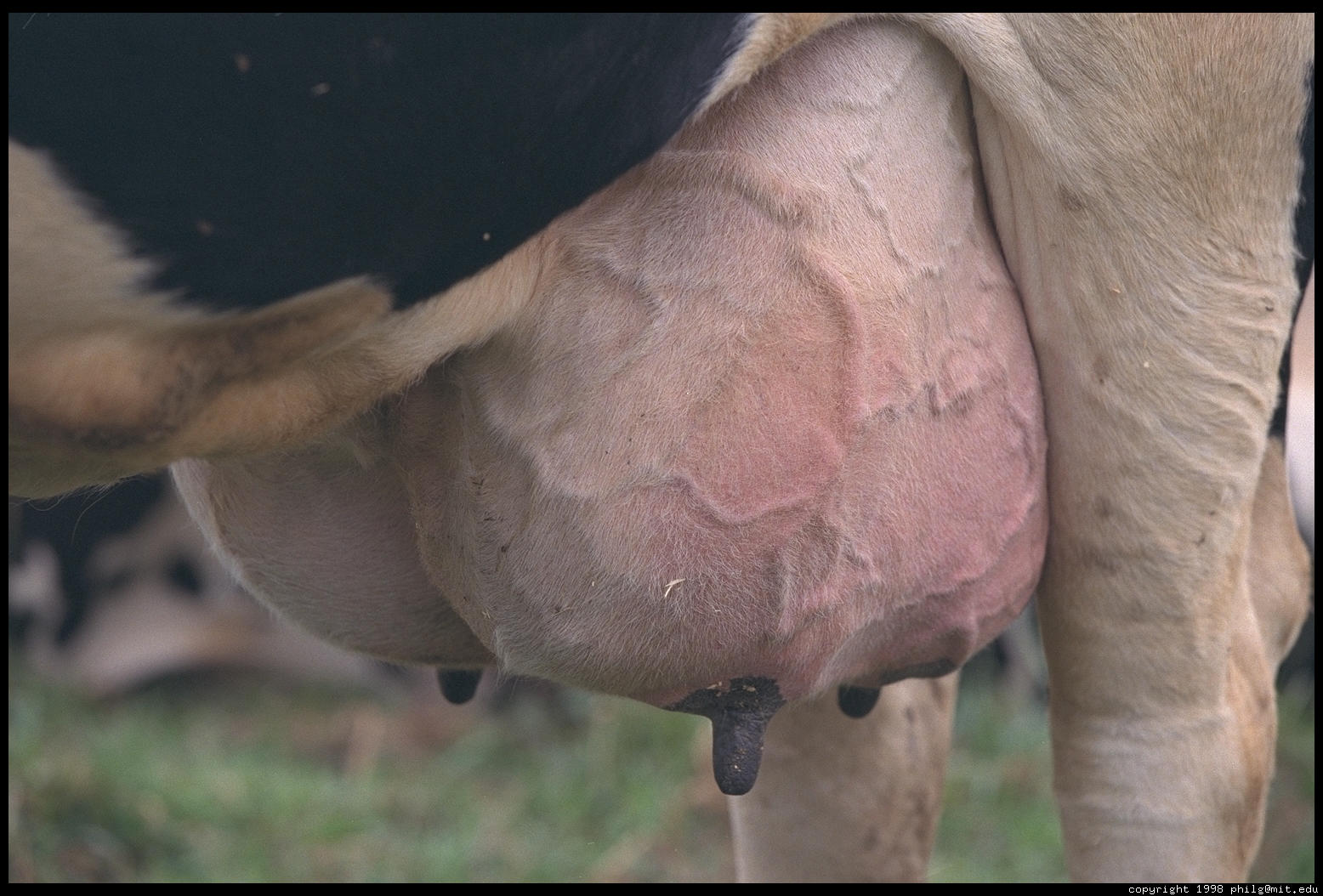
Breast is Best, breast is standard. Formula was designed as a medical option for infants who could not breastfeed either due to one of three extremely rare conditions or for the less than 2% of mothers who physically cannot produce enough milk or the less than 5% who, for other medical reasons, cannot breastfeed. Regardless of personal psychological response, the next best option for ALL babies, is the milk from another human mother. After all, why would we equate feeding our child milk produced from this:

http://advocacy.britannica.com/blog/advocacy/wp-content/uploads/cow-with-mastitis.jpg


http://philip.greenspun.com/images/pcd4554/cow-udder-38.4.jpg

As superior or even equal to the milk specifically created for this?:
Photo by of Blessed Life Photography

 Doesn't any healthy mother want the best for their child? So why don't we advocate more strongly to provide alternatives to the "fourth best" AKA worse, option to breastfeeding for mothers who either can't or don't want to nurse their babies? Why do we spend more time trying not to offend their choice to use the only option they believe is viable or obtainable instead of working to give them MORE options? Better options?

If you are interested in being a part of that option, click here to find out if donation is an option for you.


(1) Watch Your Language by Dianne Weissinger
(2) UNICEF, WHO, UNESCO: Facts for Life: A Communication Challenge. New York: UNICEF 1989; p. 20.
(3) Global Health Policies that Support the Use of Banked Donor Human Milk: A Human Rights Issue.
Further reading:
4. Enterobacter Sakazaki and other microorganisms in powdered infant formula
5. What Every Parent Should Know About Infant Formula
6. The Deadly Influence of Formula
7. Human Milk Banking
8. Nutrient By Nutrient Why Breast Is Best
9. Nutritional Information for Human Milk

Thursday, June 9, 2011

The Donor Milk Dilemma

Dripping Milk 4
Okay, hard truth first: Formula is not as good as human milk. Formula is rated fourth in the hierarchy for infant nutrition (Mom's milk, mom's pumped milk, milk from another mama, then formula) and should only be used for babies with galactosemia or any other reason that they cannot consume human milk.

Human milk is the standard of human infant and toddler nutrition. Formula is inferior, plain and simple. It has its place and can be useful, but it should not be the first option when breastfeeding/pumping cannot happen. If you cannot breastfeed, it does not follow that you must use formula.

Donor milk should be the first option after mother cannot provide the milk that baby needs. However, if you say that to most women, what is their first reaction?

"Eww! No way!"

Why? Why do we distrust other women so much as to assume that their milk is inferior to formula, when it was perfect for their own children? The risk of disease from donor milk is lower than the risk of formula contamination. But many women cannot be persuaded of this. Why?

"Women are dirty. Women's bodies are dirty."

This is a prevailing attitude in our society. It is illegal to show breasts outside your home, though men can show their nipples legally. It comes from puritanical thinking and the old "Eve committed original sin" attitude. Which is just plain ridiculous. It's the same reason that women think that childbirth must be a painful ordeal, despite the absence of pain in uncomplicated births in cultures that have not been exposed to this concept.

Women are adversarial to other women. They don't trust them. So, regardless of the fact that women go through the same STD checks in pregnancy and that donors are routinely screened, women refuse to accept that another woman's milk is clean. Sometimes, they cannot accept that another woman can do something that they cannot. Their competitive nature causes them to become resentful and aggressively reject that which they feel they cannot do.

Some women are so misogynistic that the thought of anything coming from a breast is 'dirty' -- even if it's their own! This is usually an attitude held by only the most immature mothers, though.

Many women tout themselves as 'victims' because they either made a choice not to breastfeed or were unable to, for whatever reason. But the real victims here are the babies, being given an inferior food substitute because of a cultural stigma against women's bodies.

Yes, some of it is the backlash of the medical germaphobe: 'all bodily fluids are infected with an unknown number of virulent diseases just waiting to pounce.' But even with that, there is still an imbalance, as formula is actually more bacteria-laden and research shows a greater risk of infection from it.
Refill for Will
I'm not saying women shouldn't have a choice. I am saying that formula should not be the first choice to follow. I'm saying that the cultural stigma against women needs to end. The hidden misogyny in our society needs to end. Only then can there be increased access to a variety of donor milk so that all babies who can safely consume human milk have access to it.

Saturday, January 15, 2011

Six Months Is Still Ideal

Lilly, feeding herself her first solids at six months

This post is being reorganized since the trigger article is so out of date now ;)

The open gut. It's open for the first four to six months of life to allow as many antibodies and healthful particles through from breastmilk to pass into the body as possible. It naturally closes around 6 months, but introducing solids causes it to close prematurely to protect the body from harmful allergenic particles, also cutting down the amount of helpful antibodies that baby gets (which are still plentiful, but it lowers immunity and increases risk of allergies). THAT is the reason to wait at least six months to introduce solids--our bodies aren't designed for them in the first six months (things that do not enter the stomach should not be counted, such as teething tablets, gas drops, vitamin drops, etc.). What's more, several digestive enzymes aren't formed until six months:

"The pancreatic enzyme amylase does not reach adequate levels for digestion of starches until around 6 months, and carbohydrate enzymes such as maltase, isomaltase, and sucrase do not reach adult levels until around 7 months. Young infants also have low levels of lipase and bile salts, so fat digestion does not reach adult levels until 6-9 months. "

On a food level, spinach, broccoli and carrots contain nitrites that cannot be converted in a 4 month old's gut into a safer substance and can (and have) cause(d) nitrite poisoning. What's more, most people use rice cereal as a first food, which is linked to food protein induced enterocolitis syndrome (symptoms typically include vomiting, diarrhea (sometimes bloody), dehydration and low-blood pressure. The child or infant can appear lethargic, and over time can have problems gaining weight. Hospitalization for possible severe infection in common in children with FPIES).

While it's the BMJ itself that warns against rice cereal, it has not received the media attention that this is receiving and it's irresponsible to recommend early solid introduction (which, btw, they're still not recommending before four months) when most people are still using useless and potentially dangerous rice cereal as a first food--because it's still recommended by many 'authorities' and most pediatricians.

On a personal note, I got solids at 3 months old (from my mom's plate) and I have food allergies, a strong distaste for leafy greens, and used to have chronic anemia... the things that this article says happen because of waiting six months. So, on a purely personal anecdotal level, I have to call b.s. (admittedly, anecdote =/= science).

My first grabbed her first solid by reaching over and just biting my nectarine while I was on the phone, lol, right about her 6m birthday. That is a clear display of solid readiness. My second's tongue-thrust reflex didn't vanish until almost 9 months, though she had access to the food starting a little after she turned 6 months and she did try. She choked constantly and just wasn't ready. A good rule of thumb is, "If the parent needs to use a spoon, it's too soon." If your child cannot feed him/herself, they aren't ready for solids. Most six month olds can even use a spoon if shown how to properly, if you insist on pureed/mashed foods. It's better to just start with soft, whole foods.

While I agree with not waiting to introduce allergens into the diet (another recommendation within their article), it should be done through breast milk first and first foods should be what the family is eating anyway. Exposure reduces allergens--once the body is ready for exposure. However, a child who has shown a clear allergy to a food (from the telltale red 'ring' around the anus to full out anaphylactic shock) should not continue being exposed to that food in the first year. Both of my girls had early food intolerances (my oldest was strawberries--this vanished around 14 months and my youngest was to spinach and broccoli--which also vanished between 13-15 months... my youngest presented with signs through breast milk exposure and my oldest had no signs until she ate a strawberry at 8 months).

Finally,the following organizations recommend that all babies be exclusively breastfed (no cereal, juice or any other foods) for the first 6 months of life (not the first 4-6 months):
Will these recommendations change now? Only time will tell, but in the end, the science supports waiting at least six months for the protection and optimal health of our children.


(original content having been moved):

So, bloggers are up in arms against an article from the Guardian "Six months of breastfeeding alone could harm babies, scientists now say". It's based on an article written for the British Medical Journal by people whose research was paid for by formula companies and babyfood companies. Conflict of interest much? They defend themselves by saying that they are recommending real food, such as fresh food and meat, and not baby food, but so few people give their babies real food from the get go that if they believe that, then they're deluding themselves. However, the study doesn't really say as much as the article indicates.

They are flying in the face of their own World Health Organisation's recommendation of: "exclusive breastfeeding for the first 6 months of life is recommended and breastfeeding for 2 years and beyond (with the introduction of solids from 6 months) is beneficial."

So, most bloggers are tackling discrediting these guys for their affiliations (and at least this one tried to take them seriously) or talking about the signs of readiness for introduction of solids. (Which you can find here as well)

Now, personally, I do baby led weaning, which is giving baby real foods from the start based on physiological signs of readiness and age-based readiness. However, what's bothering me and prompting me to write this is that while everyone's pointing out why it's better to wait, an important reason why it's dangerous not to wait it being left out.