Showing posts with label nursing. Show all posts

Tuesday, October 2, 2012

Fall 2012 Updates


Well, in lieu of a more interesting post this week (you are still fascinated, I'm sure), I'll give you updates on what's going on here (aka: why I have not had a lot of time to blog).

Our 10 year old kitty got very sick and almost died--
kangaroo care for a kitty brought her back!
Yes, Brat is in the sling with the baby sleeping next to her.
 First, you can blame Facebook above all else. It fires my dopamine receptors like no one's business. 


Next, my kidgets: Lilly has got the whole 1-10 addition down and is doing pretty good up through 15. She loves word problems for subtraction. She will have me knock them out (and I have to use objects for visual reference, even though it's verbal) while we're driving to the store, etc. Finally, on the math front, she's started multiplying small numbers. I just decided to throw out a couple of equations and the girl pwned them.

She's reading faster and larger words with more ease and her favorite subject is still science. Particularly anatomy. A quote from the other day was, "We have a human heart on our wall!" Because we have a printout of a human heart that's all labeled. She loves the circulatory and digestive systems.


Naomi is her usual crazy, creative self. She draws almost on parallel to Lilly and far ahead of where Lilly was at this age. I love her little people and her pony the other day was super cute. She still swings madly between being uber adorable and doing her best imitation of someone locked in a mental institution off their meds. She has her Renfield moments, too--the kid is obsessed with death right now. What is it with 3-4 year olds and death?

Oh, yeah, and I took up hooping
 Katarina is walking! She started just a few days before she turned 10 months old. She says mama, mom, dada, dad, hi, KitKat, cat, Brat, up, this, that, what and random other adorable little sounds that may or may not be words. She signs milk and claps delightedly for milks. She loves to give her family hugs and blow raspberries until the cows come home. She's got more dance moves every day and recently discovered dubstep.

She also knows how to turn on the XBox and loves playing around with the controller. She'll bring it to me to turn on 'baby show' and dances and claps when I turn it on.


As for me... I finished Pet, my second novel (sequel to Hotel of Lost Souls, which is to be a trilogy, apparently) last Tuesday (September 28th). I'm in the editing phase as well as writing the third book, Bridges. I made it about... well, one sleep cycle and six hours awake before I was writing it. Pet took me a total of about 9 weeks, although there was a break of over a year while I grew, birthed and nurtured a new human life.

Oh, and I nursed hands-free for the first time
in a baby carrier!

So, that's why I'm a bit quiet over here. The blog wasn't getting as many hits as it used to and I figure everyone else is busy, too. Or there just hasn't been enough controversy. Whatever it is, all these things combined to take me down from 2-3 posts a week to 1. I'm still here and going strong, but my typity-typity has been directed in a more focused fashion!

Thursday, May 31, 2012

Nursing Naomi

originally published Jul 17, 2009 at 12:49 AM on Cafemom

I just wanted to get down the story, it was bouncing around my head as I was nursing her a little bit earlier....


So, nursing Lilly was/is pretty much a breeze. Sure, I had difficulties with pain, frustration, etc. until I was just about crazy with it all and only my determination kept me going, but I never once regretted nursing, not even when I was exhausted and in pain and afraid she wouldn't sleep and would wake me up and want to nurse on my sore side. I knew I was doing the best for both of us and just like I was promised, it got better. One day, it was like some magical switch flipped and the bad parts were just a fuzzy memory. But with all the issues, they complimented each other. She had a terrible latch, which should have made her not get milk, but her suck was so strong and my breasts were so eager to release their milk that she never wanted for any.

So, when I got pregnant again, I was confident with experience under my belt that I could face all the challenges coming my way. I had talked to moms with horrible nursing stories that ended poorly and thanked my lucky stars I hadn't had those problems.

Then I had Naomi. She was so sleepy that it was hard to get her to stay awake long enough to try to nurse. When she did finally nurse, it was weak and with a bad latch. Since I have large breasts, I can't feel letdown, so I had no idea if she was even getting milk. She tried to nurse maybe five times while we were at the hospital and lost less than her sister (who was in the hospital for three days instead of the one Naomi was there). The nurses knew I'd done well with Lilly and never brought up formula, even though I hadn't had a chance to tell them not to.

When I got home, I started getting worried... and then my husband went back to work only a few days post-partum. I was alone, tandem nursing my babies and getting worried about my little sleepy baby with the weak suck. She started arching, screaming and getting so upset she couldn't nurse at all.

Well, I was determined, so I broke down the problems into smaller problems. First, she needed to eat. She couldn't do that if she was screaming, so I went with Dr. Karp's 5 Baby S's before each feeding. I'd shush very loudly when she was crying at my breast and it would stop the crying instantly, she'd find the nipple and try to nurse.

Her mouth was so small and my breast was so big! I used the C-hold to overcome this, as it had taken me a long time that it was okay to do with Lilly. It is how I'm used to nursing. Those big boobs needed to be manageable for us both. Hands-free nursing is for side-lying an older baby or toddler at my size and I'm fine with that! The people teaching you to nurse make it sound like a rolled towel/blanket will solve everything when it does nothing but add an unnecessary, obnoxious step in the nursing process (at least, for me).

I worked on her latch/suck by having her suck on my finger, which she had no issue with (and which told me that bottles would be deadly to our nursing relationship, because they would be so much easier for her and she needed to learn to nurse what she had) and then quickly pull my finger out and offer the nipple. It took a week of doing this before I was able to stop, but it was successful in improving her latch and suck and she was growing strong and healthy, though it was her diapers I had to rely on to tell me that she was getting enough--she had about 12 wets a day, I knew she was doing good!

Nursing hurt my baby, because of my letdown. It was too hard for her. I tried having my toddler take the brunt of the first letdown, but that didn't help (it did, however, make it easier for baby to stimulate letdown in the early days when she was having trouble with her suck, to have her sister get it going first--I suppose I'd have hand-expressed, since a pump doesn't work for me, if I hadn't had Lilly to get things going... DH also volunteered, lol, bless him, he never got that opportunity ;) I needed time to heal!). She was textbook colicky, but I don't believe in untreatable colic.

Since the Baby S's couldn't work this problem out, I decided to assume it was gas and treat it accordingly. But when looking for the baby Gas-X, I found Hyland's Colic Tablets. They said that they were also helpful in relieving the pain from overactive letdown. I decided to give them a try.

It was like a miracle. The baby who had started arching and screaming at the sight of my breast was given two tablets and a few moments later, after I shushed her calm to latch, she was sucking--and all signs of pain vanished! Within a week, the arching/screaming cycle stopped! I forgot about the tablets and it resumed. I resumed them and it was gone. I would need them until she was about 3 1/2 months, but by then, all the other issues were long resolved.

My magic switch actually happened earlier with Naomi than it did with Lilly, at 6 weeks (Lilly's was 7 weeks). But I never would have made it if I hadn't been determined and believed in my body's ability to nourish my baby. There is little more heartbreaking than your baby screaming in fear at the sight of your breast, like you're trying to hurt her. I know that with her delicate stomach, anything else would have been even worse.

If I hadn't had the support and research I'd had for the past two and a half years, I don't know that I could have made it. Not knowing if my baby was getting enough and it looking like she couldn't possibly be getting any--but there were the diapers. There, I was reassured. Having my baby not know how to latch instinctively--that was terrifying and I was so depressed, I couldn't even bring myself to ask for help. I just kept going, doing what I'd been told should work and believing in it. Having her scream and arch--if I hadn't had the Happiest Baby techniques, I couldn't have got her semi-calmly to eat. The obvious signs of pain? I had to go with my gut and try something new (the Colic Tablets) and I was validated.

It was a hard start and with the depression, I also had serious bonding issues with my baby. But we persevered. We did it and I'm so proud to still be nursing Naomi. I wish I hadn't been so depressed I couldn't bring myself to call my friends for help when I desperately needed it, but I still did it because I believed. And I have no regrets and a good bond with my baby, as delayed as it was in coming. I'm so grateful for the friends I've had and the support I've had and the resources available to me.


Addendum: Naomi self-weaned at 2.5 years old in July of 2011. It may have been partly influenced by pregnancy, but I offered and she refused for about a week or two before I stopped offering and realized that she was done. I am happy with our nursing relationship and the natural end it found. I am sad that I have no pictures of her nursing after she turned 2.
A Little Bit of All of It Preparing for Birth Series

Thursday, May 24, 2012

"I Want My Body Back"

"I want my body back."

Those words have been spoken by more pregnant and/or nursing mothers than I think anyone can ever count. I don't understand it.

If I say those words, I'm going to be talking about my body from February, 2007, when I was the thinnest I've been in decades. Although, sans the faulty gallbladder, thanks. At that time, I was exclusively nursing my firstborn.

Why wouldn't I want to look like this again?
Now, I know what is meant by those words, but for me, I suppose, it's either not an issue or I just disagree that cessation of nursing and/or pregnancy will provide that. I've been pregnant and/or nursing for over 6 years. I've been postdates twice. Neither of those babies caused me a great deal of anxiety to hasten their arrival. With my first, I wanted to stop being pressured into induction and I wanted to meet my baby. I did not want her to come before she was ready, however. With my third, I just wanted a break from prodromal labor and symphysis pubis dysfunction. I actually wanted her to stick around long enough to be a Sagittarius (not that I don't totally love my little Scorpio).

10 months: Lillyanna
Nursing Lilly

But once they were out, that didn't mean that I would magically stop nurturing my baby. Even if I had chosen to bottle feed, my baby still would have been dependent on me for everything for the next six months minimum (at which point, she could at least put food in her own mouth, though it wasn't for sustenance, still) and still dependent on me for the next... oh... eighteen years or so. I suppose a child becomes independent around 16, when they can get a job. Although, since they can't rent an apartment or get married without an adult, maybe not.

39 weeks, 5 days: Naomi

Nursing Naomi
Sure, my kids won't be physically dependent on me that long. They learn to wipe their own butts around 18-24 months around here and Lilly could use the toilet without my help at all when she was 2 (Naomi still likes a boost up from time to time and sometimes her clothes frustrate her when she waits too long). They could walk by a year, crawl by 8 months, no longer totally dependent on me for moving around.  Lilly has been able to make her own food and feed her sister, minimally, since she was 4. They still need me to make most food (especially anything particularly complicated) and will for quite some time. They still need hugs and affection. They need me to hold their hands in parking lots and carry them in bad weather.

10 Months: Katarina

Nursing Kat
My body has never stopped being mine. Not when I nursed or grew a child or my husband was handsy as a 15 year old boy with a hooker. Once the kids are done with them, my boobs certainly aren't going back to being ignored or simply ogled. My husband is biding his time until the day he can declare they're all his alone again. And I can't describe how much I miss the feeling of a baby poking around in my womb (though I don't miss the SPD, contractions, peeing every 15 minutes, food aversions, etc. etc. of course).


My body is mine. I'm simply sharing it. Maybe it's because I'm an extrovert, but there's a sadness, to me, at the thought of being alone in here again. This post was inspired by the one by Jessica for the Carnival of Weaning because what she said spoke volumes to me, even though I've only been nursing for half a decade. I won't necessarily be sad to be done nursing--I've been happy with both my nursing and weaning relationships thus far. But being done with pregnancy does sadden me, but more, I'll be a very sad mama the day our nest empties for good.

Friday, May 11, 2012

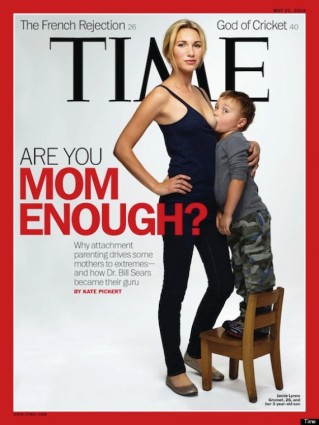
Musing on the Time Cover and Attachment Parenting


Everyone else is, so I guess it's time to blog my bit as well (Bridge? Why that one looks quite lovely to jump from!). I've been posting other bloggers' articles all day (thinking I wouldn't want/need to write this) and I think I'll start with linking to some of my favorites (just because you aren't here doesn't mean I didn't love your article--it might just mean I haven't had a chance to read it yet!):

First, the interview with the cover model

An interview with my friend, fellow (better) bloggess and one of the other mothers who was in the photo shoot

Her post on Huffpost.

Another interview with said friend:


An article by Daniél at Three House Wives


An anthropologist's take on the issue.

This article by Phil Giannotti on Attachment Parenting.

This post was originally a facebook status before being expanded, by the wonderful Lindsay!

This photo, taken by The Heady Housewife, shows that the cover image is a kind of optical illusion, making the boy look far older than he is. Her son in this picture is younger than two years old:


Tales From A Kitchen Witch shows that Time perpetuates a sizist notion of beauty:


A response to the title by hobomama.

What about the Daddy Wars? Charlie (awesome lady I'm proud to know) writes.

Interview with Mayim Bialik, one of my favorite attached celebrity moms:


And a response on FB via photos that I enjoyed (which is where the cat picture at the top came from as well):
 
Now, the article was supposedly on Attachment Parenting. I don't know, as due to their tactics, I have no interest in buying the magazine and supporting the fuel they've added to the "Mommy Wars" that simply should not exist. Instead, it's all become about breastfeeding and specifically, full-term (also known as 'extended', but I don't like that term as it implies that it is abnormal when it is the biological norm) nursing because of the cover.

So, people are talking. Some of it is good, honest curiosity. Like the majority of moms, I had no intention of nursing a three year old, much less a four year old! My initial plan was to nurse for a year or so, then give my toddler pumped milk in a sippy until she was two. Ha! First, I don't respond well to the pump, so it's from the tap or almost none at all. I thought it would be weird to nurse someone who could talk about it. Then I got the first, "Mmm, ice cream!" and all of that went away (I was eventually informed that the other produced fruity milk while the ice cream breast tasted like various confections).


Like Dionna said (and I've said and many other mothers have said), you don't wake up one day and have a two year old (well, you do, but that kidlet doesn't look any different than she did the day before or the week or month before). It seems strange, looking down at a twelve month old and knowing that some people think that's too old to nurse. That's a baby! I didn't even notice a difference in nursing a one year old versus a six month old, or an eighteen month old versus an eight month old.
My opinions slowly changed as my baby aged and I became more comfortable with nursing (I once thought I wouldn't be able to bear to do it at all), being a mother and the biology and science of it all. As I became better educated, was more exposed to other nursing mothers and watched my children grow, I knew that all that I thought I'd 'known' before just wasn't so. At least, not for me and my family.

We practice child-led weaning. From solid introduction (where the baby feeds herself based on signs of readiness) to the end of nursing, I follow many cues. With Lilly, the final indication that our relationship was ending was her losing her latch. She couldn't get milk and I had an aversion to nursing her. We talked about it and she stopped. It was more mutual than child-led (Naomi weaned on her own a few months later--I kept offering and she just slowly stopped). 
From baby
to toddler
to our last nursing photo, when she was 4
(Sadly, I don't have any photos of Naomi nursing after she turned two--I had camera issues during that time and was busy writing a book and gestating Katarina)

What are the benefits of nursing a toddler or preschooler? Much the same as nursing a baby, only to different degrees. Nutrients in milk becomes more concentrated as Mom's body senses the child's increasing needs and becomes extra loaded during natural weaning, preparing the child to be on his own, immunologically and nutritionally. It's not full nutrition anymore, but more like a dose of vitamins with immunity information in the stem cells. It's still comforting, reconnecting and contrary to popular old wives' tales of the day: it encourages healthy independence. There has been no upper age limit found on the benefits of nursing--they continue stacking. You can read more here.
The age children reach independence (not true independence, of course, as for that, you have to be able to hold down a job, pay bills, etc. -- you certainly can't expect independence from someone who can't wipe their own posterior!) depends on the child. Their personality plays a lot in it, but studies have shown that nurture is also very important. A child whose needs are consistently met is more confident and secure in their independence. They also may reach it sooner (but I think that has more to do with temperament--a clingy baby is likely to be a clingier child regardless of nurturing). I have two very independent little girls and I do believe my parenting, which nurtured attachment and respect has a lot to do with that, particularly with my oldest.

As for Attachment Parenting--what is it? Well, it's about creating an environment for your baby that supports healthy attachment (hence the name). It is the 7 Baby B's, for starters. But that's just a rough guideline, not some set of rules. A mother who cannot nurse can still easily practice attachment parenting. As can parents who do not feel comfortable having baby in bed with them (cosleeping in a crib is a wonderful second choice!). Also, mothers who cannot handle the strain of babywearing on their body, for whatever reason. It's not a competition. It's not a club. It's simply based on the most natural ways to care for a baby that supports the health (physiological and psychological) of an infant, toddler, etc. 

Technically, full-term nursing is not even a part of attachment parenting! It's a part of Natural Parenting, which is complimentary, but not the same thing. Cloth diapering, elimination communication, baby led solids/weaning, etc. are all Natural Parenting and not AP--they are lumped together because they are agreeable. You can read more about what AP is not here.

I am so sad to see that people are flocking to denigrate parents who are simply trying to follow their instincts and do what they feel is right for their family. I am sad that the "Mommy Wars" even exist or that so many people seem so quick to join the ranks and take up arms. I hope that people can put aside their prejudices and try to use this as a learning experience instead of falling into cultural xenophobia.

We need our sisterhood back, as mothers. We need to remember that which connects us all as mothers: love. 

Friday, April 27, 2012

Musing on Unlawful Removal From Businesses

The following is expanded from journal posts made over the course of the two days following the incident.

 
On Sunday, January 13, 2008 at around 4:45 pm, my rights as a breastfeeding mother were violated. I was shopping at Hot Topic with my Christmas money and had collected a few items to buy (including a couple of kick ass onesies). Lilly was toddling around and slipped. She banged her head on a shelf and started crying. I tried to calm her down, but she was flipping out and wouldn't sit back in the stroller, so I sat down amidst the clearance shirts I was already looking at, out of the way of other customers, and started nursing her while continuing to shop.

I had her head basically in the shirts and my shirt was covering every bit of my breast as well as a bit of her face. I was the picture of 'discreet,' sans a nursing cover (which I had tried in the past and ended up flashing an entire store... I could not nurse in one without flashing, so I stopped trying to use them, as I found myself to be more discreet simply using the bottom of my shirt).

An employee walked by and smiled at me and said hello. My husband was looking through the band shirts for me while I continued to browse the clearance. A minute later, the same employee came back and informed me that I couldn't nurse in the store. I calmly explained that that wasn't true and that the law states that anywhere that I am allowed, my baby can eat.

"Well, we've already had a customer complain," she insisted. We were three customers!

"That doesn't change the law," I told her and she left to talk to her manager. Another minute or so passed and then the manager (turns out she was only an assistant manager, but she was the authority in the shop that day) came over to squat next to me on the floor.

"You can't expose yourself in public," she began and I looked down. All you could see was my baby's hair and my shirt. Not even a millimeter of breast was 'exposed.' My gaze drifted over to the pregnant teenager across the aisle, whose breasts were on full display. "Hot Topic is a private store--"

"There is no such thing," I replied, adrenaline flooding my system from the emotions burning inside me. She thought her store was above the law?

"You can't just squat down and breastfeed," she snarled. I was sitting in the exact same position I had been to reach the bottom shelf of shirts, which is only an inch or less off the floor, with some spilled over from previous searching customers. She continued berating and lecturing me every time I tried to quote the law and eventually she dropped the word 'indecent' and we degraded into a full-out argument. I was furious, embarrassed, feeling harassed and my mind went to the teen, worried that this was her first nursing in public experience and it would give her an incorrect view of her rights as a mother. The manager refused to give me her name, though I asked repeatedly.

Finally, Lilly stopped nursing and started staring at the woman yelling at me. She didn't notice and was telling me to leave, over and over. I just gave up on her and asked if I could buy my merchandise on my way out. She told me that I could and I got into line, but it wasn't over for her. She broke my last bit of control when she sneered that I was wrong and couldn't go around exposing myself in public. Previously, she had been speaking softly and insisting she wanted this to be a 'private matter.' This comment was loud enough for the people around to hear.

I turned around and yelled at her that my rights were being violated, that the law was on my side, etc. Somehow, I had managed to avoid calling her 'ignorant,' 'stupid,' and 'prudish' (words popping into my head) although my mouth was running beyond my control, I was so angry. She called mall security and told me I could no longer purchase my things and that I had to leave. I threw my clothes back at a shelf and accidentally hit her with the onesie. Oops (really--I didn't want assault charges, I just wanted out of there at that point and didn't want them to think I was trying to shoplift).

She then started saying "You need to leave, now!" over and over, while I was insisting that I was trying, but she backed me into the line of customers and rammed my stroller into a nearby customer, at which point, she seemed to notice that she was preventing me from leaving. So, she announced "Everyone move, she's leaving!"

An old woman was smirking at me and my husband told me that he was pretty certain she was the one who had made the complaint. It was bad timing, as then I turned to her and called her a fucking bitch. She stopped smirking. We left and mall security never showed up, so I bought a calendar on the way out that I'd been eying.


I went home and journaled about it on Cafemom. Information flooded in from supportive moms who were outraged and cries for a nurse-in began. An ex-manager for another Hot Topic quickly contacted the company and provided information for me (and others) to do the same. Before I knew it, the Vice President of Hot Topic, Ed Gusman, had joined Cafemom for the express purpose of trying to contact me (I was busy taking care of my baby, unaware of the storm I had set in motion with my journal).

My husband was shocked and angered by the whole thing and he contacted Mr. Gusman on my behalf. I sent Mr. Gusman an e-mail with the details of the incident and this is an excerpt (I shared the letter in its entirety in another journal post):

"I felt humiliated, angry and discriminated against. These are not feelings I ever expected to be subjected to in Hot Topic. In fact, they were very much against what I have always believed Hot Topic stands for. I am hurt and cannot believe that I was put through this, simply for trying to exercise my legal right to nourish and comfort my little girl."

I pointed out that had I been offered the changing room to nurse in, while it still would have been a violation of my rights, I would have used it without confrontation. The problem was that I was told to leave just because I was nursing. I then went to include the law for my state in my journal:

Breast-feeding in public permitted.
191.918. Notwithstanding any other provision of law to the contrary, a mother may, with as much discretion as possible, breast-feed her child in any public or private location where the mother is otherwise authorized to be.
(L. 1999 S.B. 8 & 173 § 6)

I received an e-mail reply almost immediately.

Dear [my name here],
Thank you very much for bringing this to my attention!
I am very concerned about the situation you’ve described and am investigating the matter now. 

I would very much appreciate the opportunity to learn more about your experience. 

My husband called the number Mr. Gusman attached to the message and before 24 hours had elapsed from the time of the offense, everything had been resolved. Ed asked to talk to me and apologized. Before he was removed from Cafemom for being a man, he read up on breastfeeding and was wowed by the amount of information available.

I was entirely impressed that he chose to educate himself not only on the laws, but the reasons women choose to nurse and the importance of breastfeeding. He asked me what he could do to make it up to me and I asked that sensitivity training be provided for all management of Hot Topic stores as well as education on the laws, to prevent this from happening to anyone else. He readily agreed.

He was clearly baffled that that was all I wanted and when I didn't ask for anything else, he offered to send me a gift card to purchase the items I had been forced to abandon. I let him know that while that wasn't necessary (as all I wanted was for this not to happen again), I appreciated the gesture and told him what I had been planning to purchase (he did send the gift card).

The response I received was more than I ever could have hoped for. Hot Topic's actions should be a model for any store in this situation. Not only did they avoid a scene (and becoming a hot topic they never intended!) but they left me a satisfied, returning customer. The assistant manager who treated me so poorly was subject to disciplinary action and the head manager sent me a written apology and invitation to the store (I did not go the day he asked, not wanting to be a spectacle).

I did buy the items that had been in my 'cart' -- ironically, one of the shirts was this one (which showed far more of my breasts than I did while nursing):


Unfortunately, upon my return, the employees did whisper about me and watch me like some negative celebrity, but that only happened the first time I returned. The incident was forgotten after a while and I still shop there (I don't recall if I've nursed there since the incident--I only nurse in public when my baby clearly needs to).

This incident was traumatic for me and my heart goes out to every mother person who has been refused service or kicked out of a place for nursing any reason when they were only trying to patronize the establishment. Discrimination is a cruel thing and needs to end.

Saturday, January 15, 2011

Six Months Is Still Ideal

Lilly, feeding herself her first solids at six months

This post is being reorganized since the trigger article is so out of date now ;)

The open gut. It's open for the first four to six months of life to allow as many antibodies and healthful particles through from breastmilk to pass into the body as possible. It naturally closes around 6 months, but introducing solids causes it to close prematurely to protect the body from harmful allergenic particles, also cutting down the amount of helpful antibodies that baby gets (which are still plentiful, but it lowers immunity and increases risk of allergies). THAT is the reason to wait at least six months to introduce solids--our bodies aren't designed for them in the first six months (things that do not enter the stomach should not be counted, such as teething tablets, gas drops, vitamin drops, etc.). What's more, several digestive enzymes aren't formed until six months:

"The pancreatic enzyme amylase does not reach adequate levels for digestion of starches until around 6 months, and carbohydrate enzymes such as maltase, isomaltase, and sucrase do not reach adult levels until around 7 months. Young infants also have low levels of lipase and bile salts, so fat digestion does not reach adult levels until 6-9 months. "

On a food level, spinach, broccoli and carrots contain nitrites that cannot be converted in a 4 month old's gut into a safer substance and can (and have) cause(d) nitrite poisoning. What's more, most people use rice cereal as a first food, which is linked to food protein induced enterocolitis syndrome (symptoms typically include vomiting, diarrhea (sometimes bloody), dehydration and low-blood pressure. The child or infant can appear lethargic, and over time can have problems gaining weight. Hospitalization for possible severe infection in common in children with FPIES).

While it's the BMJ itself that warns against rice cereal, it has not received the media attention that this is receiving and it's irresponsible to recommend early solid introduction (which, btw, they're still not recommending before four months) when most people are still using useless and potentially dangerous rice cereal as a first food--because it's still recommended by many 'authorities' and most pediatricians.

On a personal note, I got solids at 3 months old (from my mom's plate) and I have food allergies, a strong distaste for leafy greens, and used to have chronic anemia... the things that this article says happen because of waiting six months. So, on a purely personal anecdotal level, I have to call b.s. (admittedly, anecdote =/= science).

My first grabbed her first solid by reaching over and just biting my nectarine while I was on the phone, lol, right about her 6m birthday. That is a clear display of solid readiness. My second's tongue-thrust reflex didn't vanish until almost 9 months, though she had access to the food starting a little after she turned 6 months and she did try. She choked constantly and just wasn't ready. A good rule of thumb is, "If the parent needs to use a spoon, it's too soon." If your child cannot feed him/herself, they aren't ready for solids. Most six month olds can even use a spoon if shown how to properly, if you insist on pureed/mashed foods. It's better to just start with soft, whole foods.

While I agree with not waiting to introduce allergens into the diet (another recommendation within their article), it should be done through breast milk first and first foods should be what the family is eating anyway. Exposure reduces allergens--once the body is ready for exposure. However, a child who has shown a clear allergy to a food (from the telltale red 'ring' around the anus to full out anaphylactic shock) should not continue being exposed to that food in the first year. Both of my girls had early food intolerances (my oldest was strawberries--this vanished around 14 months and my youngest was to spinach and broccoli--which also vanished between 13-15 months... my youngest presented with signs through breast milk exposure and my oldest had no signs until she ate a strawberry at 8 months).

Finally,the following organizations recommend that all babies be exclusively breastfed (no cereal, juice or any other foods) for the first 6 months of life (not the first 4-6 months):
Will these recommendations change now? Only time will tell, but in the end, the science supports waiting at least six months for the protection and optimal health of our children.


(original content having been moved):

So, bloggers are up in arms against an article from the Guardian "Six months of breastfeeding alone could harm babies, scientists now say". It's based on an article written for the British Medical Journal by people whose research was paid for by formula companies and babyfood companies. Conflict of interest much? They defend themselves by saying that they are recommending real food, such as fresh food and meat, and not baby food, but so few people give their babies real food from the get go that if they believe that, then they're deluding themselves. However, the study doesn't really say as much as the article indicates.

They are flying in the face of their own World Health Organisation's recommendation of: "exclusive breastfeeding for the first 6 months of life is recommended and breastfeeding for 2 years and beyond (with the introduction of solids from 6 months) is beneficial."

So, most bloggers are tackling discrediting these guys for their affiliations (and at least this one tried to take them seriously) or talking about the signs of readiness for introduction of solids. (Which you can find here as well)

Now, personally, I do baby led weaning, which is giving baby real foods from the start based on physiological signs of readiness and age-based readiness. However, what's bothering me and prompting me to write this is that while everyone's pointing out why it's better to wait, an important reason why it's dangerous not to wait it being left out.

Friday, November 12, 2010

Breastfeeding Isn't Easy

I see comments all the time about how "it was just too hard" as though the mothers who continued breastfeeding had it easy. Because sore nipples, plugged ducts, mastitis, feedings every 1-2 hours, dealing with flow issues and upset tummies as a result, worrying about supply because there's no ounce markers, having to change one's diet to adjust for baby's intolerance(s) or allergies, feeding sessions lasting up to three hours, cracked nipples, bleeding nipples and blood blisters, scathing remarks/glares if we dare feed our babies out of our own house and in some cases, supplemental feeding systems... are easy?

Honestly, though, who said parenting was easy? And taking shortcuts may not be cheating in the traditional sense, but it cheats baby out of the benefits of the standard of care. Not just nursing, but in all aspects of parenting. "You aren't managing a convenience, you're raising a human being."

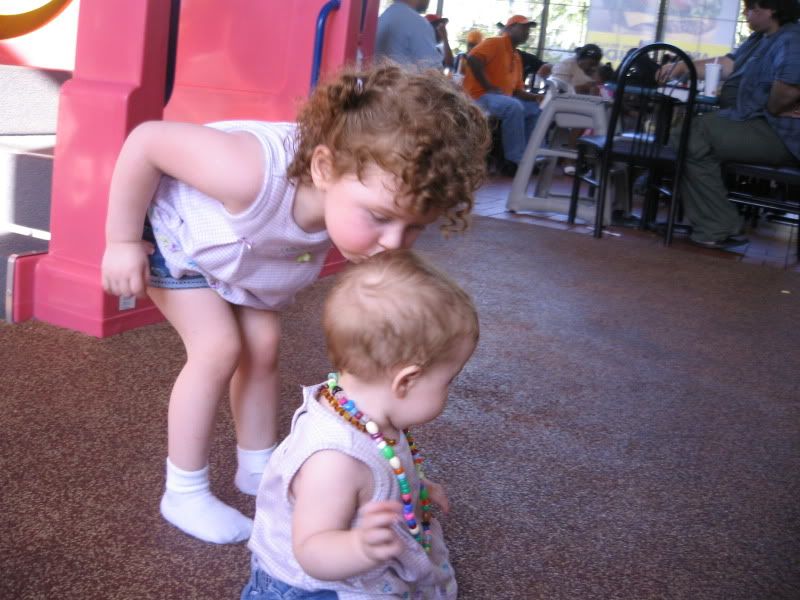
045.jpg kisses picture by Xakana

I'm not looking for your story about why it was so much harder for you than my friend who doesn't make 50% of the supply she needs to exclusively nurse and yet doesn't use bottles. Or me, who had a baby who screamed at the sight of my breast, weak suck, latch issues, one side preference, etc. Or blood blisters, choking from overactive letdown, living in horrible pain postponing surgery to get to a point where my baby would have enough of my milk to get through it... Or the mom friends I have with PCOS. Or those who've had to adjust their medications for breastfeeding-friendly ones. Those who live in daily pain trying to reach a minimum goal of nursing before going on medications or having surgery that would make it all better.

I've heard all the stories and I know moms who really couldn't do it (I have friends that even I would have/did encourage to stop for both mom and baby's sanity/health) and moms who did it when no one else believed they could--because they refused to take "no" for an answer.

The whole point of this is that it's NOT always easy with floods of happy hormones. I don't enjoy nursing. I enjoy the benefits, sure, and how deliriously happy it makes my kids. I don't notice any "special bond" or go to la la happy hormone land. I don't do it for me.


Inspired by HeidiLJ

Less than 2% of women don't make enough milk to exclusively breastfeed. That doesn't mean they shouldn't breastfeed at all, just that they need to supplement. Even that can be done at the breast now. Less than 5% can't do that for other reasons (mastectomy, medications, psychological trauma, etc.). But the number of mothers who bottle feed is closer to 40% that goes up the closer to a year you get. The number of women who nurse to the recommended 2 year minimum is only like 12%.So those who even make it half way (one year) is only like 35%. So all of those women have a reason to be proud--out of the 93%-95% that should have nursed that long, they were the ones who did. I'm not saying that bottle feeding is never okay or even necessary! I'm just saying that parenting isn't easy and there are more options than most people even know!

Thursday, October 21, 2010

Cosleeping


Two things inspired this: One, a trip to the pediatrician where she was nosier than she's ever been and one of her questions was to ask if Lilly had her own room (yes, she does--no, she doesn't sleep in it and no, we didn't say that because it's none of her business and I don't appreciate having another person's culture and family structure preferences pushed on me, which is what I suspect would have followed). Two, there was a Carnival of Breastfeeding on nursing and sleep, so a bunch of posts about sleep popped up. Since I nurse while cosleeping, that's what this entry is going to be about.

So, I went into parenting with a different perspective than most Americans on the issue of sleep. To me, the idea of having a baby in another room, where you aren't aware of what's happening to them, if they're truly safe or even alive, is disturbing. I would never trust a mechanical monitor to tell me that my baby is breathing, nor would I trust that my baby is not being injured like hundreds are every year by their cribs. Hell, SIDS used to be called crib/cot death.

I coslept with my mom as a baby, toddler and child. Like many Japanese children (the culture which held a special place in my mother's heart and influenced such parenting practices as cosleeping, breastfeeding for two years and baby wearing), I was in my mother's bed until I was about 8 (the average age for a Japanese child is actually 10 before they begin sleeping alone--if another baby is born, usually they sleep with another family member), which is roughly when I was ready to sleep on my own... to a certain extent. There were extenuating circumstances and I probably would have stuck around longer if I'd had the choice--but I'm glad I had the time I did and that my mom followed my cues on where to sleep, more or less.

It's not normal for humans to sleep alone. 1/4th of American couples sleep in separate beds, however, and the vast majority of American children sleep alone. Some are lucky enough to share a room or even bed with a sibling and a few are lucky enough to have access to a family bed as long as they want.

It's a cycle. In infancy (or early childhood), the baby is isolated, being forced to learn to sleep alone, being denied the human contact that they need (24/7--parenting is not a 6am-8pm job) and it continues through childhood. This creates a need for an artificial sleeping environment that is not conducive to bed sharing at any point in life. In fact, most couples have to learn to sleep together and many are just incapable in the end.

Throw in a healthy baby, who moves, wriggles, snores, coos, wakes and needs all. night. long. and it can be something that a Western-reared parent just can not handle. They can't sleep and so they fall back into the cycle that they were raised to fall into--by sending the baby off to sleep alone so that they can get their stimulating-sensory-event-free sleep.

Cosleeping doesn't have to be bed sharing. It includes just having the crib in the parents' room (which is actually recommended by the AAP for the first 6 months of life--which very few people seem to know) and then the toddler bed and kid's bed until they're ready to be alone. It doesn't have to be an intrusion into mom and dad's space--there are healthier compromises. But this, too, can be very hard for the parent who has been conditioned to sleep only in total darkness and silence.

A white noise machine (or a fan) can help many people get past the little noises in the night, but if baby's not in bed, that can defeat the 'mom wakes at the smallest sound' safety that's built in to protect our babies and keep their natural biorhythms going (which are attuned to our own).

It's not for everyone. People who smoke, drink, do drugs or take prescription sleep aids should never have baby in their bed (and if you smoke in the house, you shouldn't have a baby in the house at all--it's the number two direct cause of SIDS). That crib in the room can still be an option, however. People who are addicted to big, fluffy pillows and miles of bedding should not have baby in the bed. People who are exceptionally deep sleepers--same deal (and if you're drop dead exhausted from a sleep situation that's not working, that's not particularly safe, either!). Obesity? Well, that's a crock. The whole "overlying" thing makes it sound like fat people have no sense of touch. Without a secondary problem, that's just not the case. Secondary conditions that may cause dangerous sleeping habits that afflict obese people also affect thin people and should be taken into consideration with anyone before sharing bed with a baby.
The ideal situation for cosleeping is the biggest bed you can afford with the firmest mattress, on the floor (no frame and no headboard/footboard for baby to get caught in) with a parent/parents who is/are not under the influence of any substances, including prescription substances, with no pillows around the baby and no heavy blanket (baby does best in a sleep sack or something similar).

We do a family bed and sleep great. I know where my kids are (so no horror movie scenarios for me, thanks), they know where we are (no monsters to keep us coming back in so they don't feel lonely, scared, etc.) and when they're ready to have their own beds, that will be up to them. That's what works for our family. Like I said, I was raised to see the whole thing completely different from the culture I am surrounded by. I would never ask of my children what I wouldn't want for my own life. And in this case, that is to be alone while they sleep. Finally, it facilitates nursing as well as our connection. Never do I feel as at peace as those last moments of looking at my sleeping family before I let myself succumb to sleep.

Thursday, September 23, 2010

Weaning and the Ways it Happens

044.jpg Lilly in her carseat picture by Xakana
So, the World Health Organisation (WHO) and UNICEF recommend a minimum of two years of nursing 'or beyond'. A lot of people don't know that. The American Academy of Pediatricians (AAP) and American Academy of Family Physicians (AAFP) recommend a minimum of one year and then 'as long thereafter as mother and child desire.' Both recommend no other substances in the first six months of life.

So, according to the experts, babies should be nursed at least a year. We all know that this isn't usually the case in the US, though in other countries, the time varies both in modern times and historically. In UK Europe, nursing only through infancy has been a pattern for quite a while, while in Japan the norm was 2 years and China was recorded as children nursing until up to 5 years. The worldwide average for weaning is 2.8-4.2 years (depending on the study and if the US is included--it drags the worldwide average down due to its low breastfeeding rate, premature weaning tradition and large population).

Okay, so that's all the recommendations and the average and yada yada. Now, one question I was once asked as my still non-verbal toddler nursed was, "Don't you have to wean soon?"

It was asked in complete innocence and I answered honestly, "No. Children will wean on their own. I don't actually have to do so."

It's true! While rarely, children will nurse 6-7 years, the average age of children weaning on their own is much earlier--about the range of the worldwide averages, actually. Somewhere between ages 2 and 5. Children will not typically wean without some sort of encouragement (even if not deliberate) before 18 months of age.

Does that mean every family has to wait until their child is ready? Of course not! Waiting at least the minimum 2 years is best for baby and mom, but people wean in many different ways for many different reasons. Some women wean earlier than they would like due to work, lack of support, medical conditions, peer pressure, etc. Some women nurse longer than they actually want because they aren't sure how to wean; and some women are simply "done" before their children. Nursing IS a two way street.

I'm not going to tell you how to wean. I have no clue. It's not something I'm interested in. But I will now tell you about the different kinds of weaning. Oh, and a child after the age of 6 months who nurses, starts eating food just like bottle fed babies between 6-14 months and eats the same stuff ;) They drink from cups (mine started drinking water from cups at 6 months with my first taking pumped milk as early as 4 months in a Nuby Softspout--we mostly skipped sippies and went with straw cups for better oral development--until my second decided that they were more fun upside down, so we switched back to sippy cups for her--though she and her sister both can drink from open cups easily... I even prefer straw cups for me for minimizing spills) at the same ages and nothing changes except that they still take nourishment from their mother directly.

Parent-led weaning: This is the most common. This is when the mother chooses to wean and institutes a weaning strategy, such as "Don't offer/don't refuse," gently replacing nursing sessions, going out of town, pretending her breasts are broken, etc.

Influenced weaning: This one isn't talked about very much and is one of the main reasons that I'm writing this entry. Influenced weaning is when a child is weaned due to circumstances such as milk drying up, accidental parent-led weaning (such as a mother instituting "Don't offer/don't refuse" without knowing that it's a weaning technique, refusing to nurse so often that the child gives up or giving cues that they don't want to nurse anymore which the child picks up on), or societal pressure (such as the father or a nosey grandparent or auntie making rude comments that shame the child or parent, disparage the nursing relationship or attempt to make the child feel bad for nursing--like saying 'Big girls don't nurse! Don't you want to be a big girl?'). Nursing strikes would also fall into this category (more explanation on this later).

Mutual weaning: This is pretty rare and comes from the mother and child making a deal that they will stop nursing at a certain point. This is usually in a full-term nursing relationship (2+ years) when the child is old enough to be reasoned with and the parent no longer desires to nurse.

Child-led weaning: This is when the child is given support to nurse but slowly and gradually stops doing so on their own time.

Sudden cessation of nursing is not child-led weaning, it's a nursing strike. Nursing strikes happen for a variety of reasons and at different ages in life, but usually in the first two years. Nursing strikes are often used to wean children without trauma, but if they occur in the first year of life, they should be reversed if at all possible, unless the mother needs to stop nursing for some reason.


So there you have it. The different ways that children wean. For extensive information on weaning, "How Weaning Happens" by Diane Bengson is considered the best book by all the friends I know, on explaining the subject (warning: this is NOT a book on how to wean!).

Happy nursing (and weaning)!


Some resources I used (outside of several books):

http://aappolicy.aappublications.org/cgi/content/full/pediatrics;115/2/496
http://www.aafp.org/online/en/home/policy/policies/b/breastfeedingpolicy.html
http://www.wpro.who.int/media_centre/fact_sheets/fs_20070801.htm
http://www.amazon.com/How-Weaning-Happens-Diane-Bengson/dp/0912500549