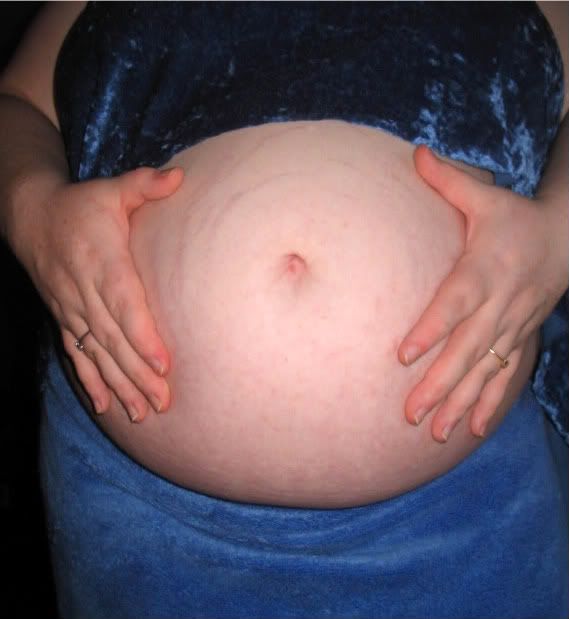
So, with my first pregnancy, I wanted a midwife, but between bad information and some bad luck, I was unable to get away from the obstetrician (that I originally hired because I thought that was just what you did). It's something I really regret. On my first appointment, she made me cry by telling me that I had basically no control over who would be at my birth (or be putting their hands inside me).
I figured, okay, well, I guess that's how it is at OB practices. But appointment after appointment, she spent the time working on trying to make me afraid that this or that could happen. I was told not to read anything about pregnancy/birth or to participate in my Due Date Club (all of which I ignored, of course). She read my birth plan in front of me, told me everything was good, went over it and approved it.
Then, around 36 weeks, she freaked out over my use of the term 'emergency' to say that was the only time I would agree to a cesarean. Like most women who had never been to medical school, I had no clue that the obstetric definition of 'emergency' was a far cry from the average person's. And rather than just try to explain, she blew up and went on a rant and when my husband tried to calm her down by asking what the risks of an actual emergency cesarean were, she announced that it was basically guaranteed with "someone like [me]."
She continued with ignoring the whole agreement we had that we would not discuss induction before 42 weeks--she started pressuring me to induce at 38 weeks. I agreed to a sizing ultrasound and she was disappointed to see that it did not agree with her assertion that I'd have some gargantuan giant (with no medical reason to believe that I would). She was frustrated that I wouldn't let her control my birth and she took it out on me and tried to frighten me into it as much as she could (all the while trying to sound reasonable, kind and caring). If I hadn't had the awesome, supportive community of natural mama friends that I had, I might have been beaten down.
So, I think you can understand why I was wary in my second pregnancy and going to an OB, even if it was a new one. Due to insurance issues (screw ups in the administration part of it), it was 20 weeks before my first appointment. Every appointment, I was stressed and worried and sure that the First OB from Hell would reappear in the skin of my new OB. But time and time again, he was a great doctor, involved my daughter in appointments and was quite a CNM in OB clothing.
I had my VBAC with him and while I have some complaints about how I was treated by the staff, I don't have any complaints about my doctor. But I didn't want to birth in a hospital again. I didn't want to do the whole cycle of fear all over.
While I was recovering from trauma from my second daughter's labor and postpartum period, a friend had a wonderful announcement: a new birth center was being opened in my city. I was so excited. As people talked about the midwife who worked there, my excitement just climbed. No one had anything negative to say about her and really, she sounded too good to be true.
Still, I sent her an e-mail asking some questions about insurance, VBAC, etc. and was even more excited by her answers. She took my insurance, she was planning to take VBACs, it was all a go! Honestly, that was the last bit that I needed to heal and be prepared to get pregnant again.
Fast forward to my first appointment. I felt no fear as I approached the building. No trepidation, no sense of 'this person is going to hurt me, take my autonomy and make me cry.' It was an amazing feeling. I'm sure that the birth center being in an old house really helped--no sterile, cold office to make me feel separate and subject to someone else's will.
 First, there was a living room for a waiting room. Not that there was much waiting--it was more to give the kids a place to play and my husband somewhere to sit comfortably with them where he didn't have to feel like he was dodging around being in the way (a constant concern of his).
 The kids immediately connected with the midwife and her assistant and frankly, so did I. There were these magical words coming out of her mouth--it was like I was in Bizarro world. "You'll be expected to eat and drink to comfort in labor." "We don't cut the cord until it's done pulsing." "No one's going to be telling you when to push, we want you to listen to your body." "You'll be catching your own baby." (This was after I mentioned how much that meant to me with my VBAC)
There was a birthing pool in the room where the appointment took place. I sat on a real bed, not some table-bed thing. Normal sphygmomanometer, normal doppler (although the assistant was amazingly gentle with it--I'm used to the doppler wand making me kind of sore--and she found my baby's heartbeat at 10 weeks, which I didn't think would be possible!), O2 tank hidden off but available, etc. The safety measures available, but not obvious (and I don't mean not obvious by how they are kept in cabinets in the hospital, etc. -- actually not obvious).
My kids were included in what was going on. At my last appointment, my oldest was taught how to pump the sphygnomanometer and today, she and her sister both got to pump it up most of the way before the assistant needed to take over and get the actual reading.


Then everyone took turns listening to my heart.
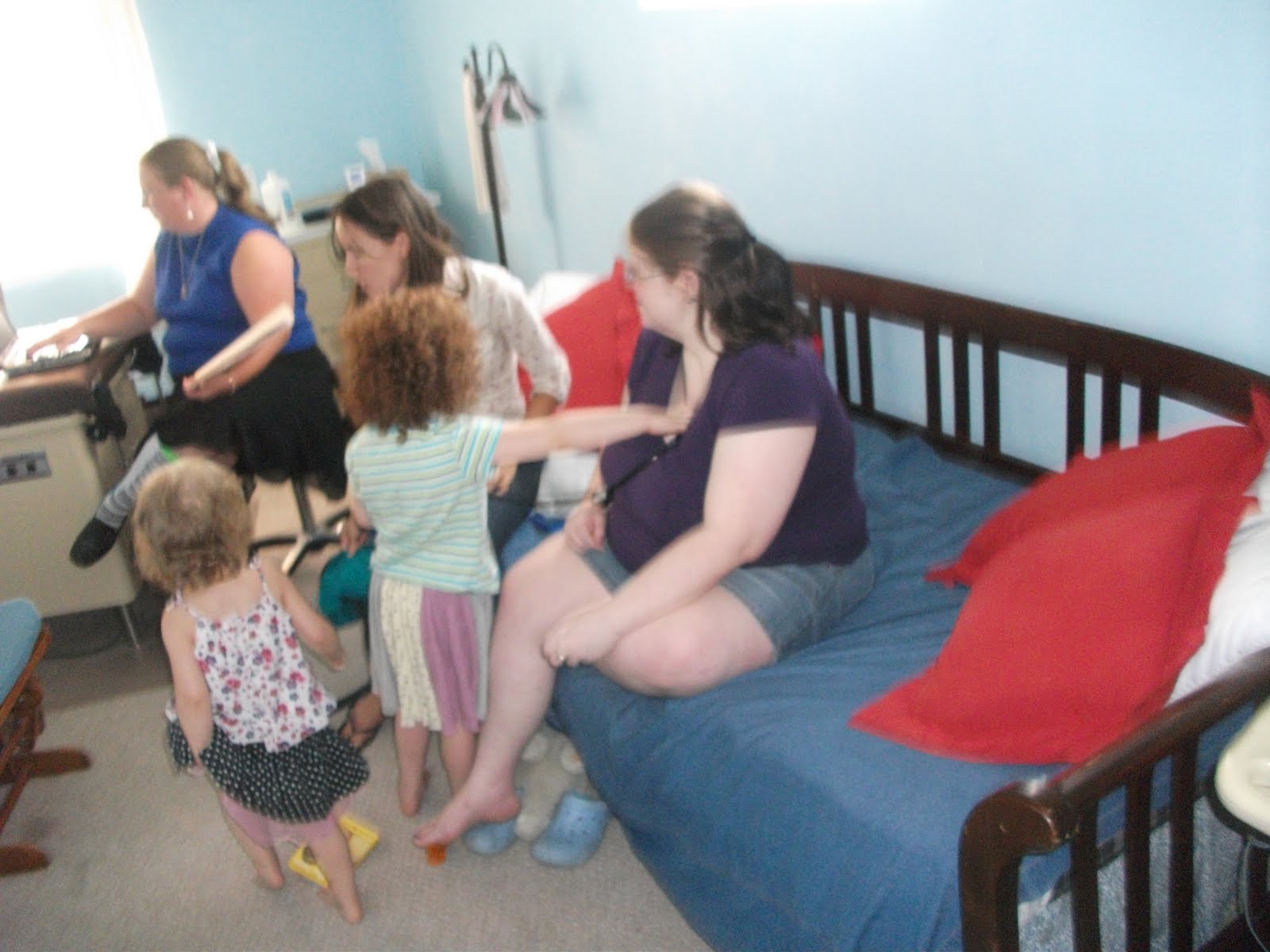
Seriously, a picture is worth a thousand words. When are you ever going to see the scenes above at an OB's office? And an appointment isn't the same either. Today was my glucose test and it was probably the longest I ever waited--about ten minutes--while I paced around, letting my grape juice burn off (as being stationary is bad for the test!) and poked around the rooms (which is when I saw the O2 tank for the first time, actually) curiously. I've had the pleasure of watching the birth center be turned into the lovely building that it is now, since it was so new when I first started coming.
While my daughter shot darts at the door under the encouragement of my midwife and her sister laughed, stealing them and running back to Daddy, we talked about diet (protein, protein, protein!), concerns, where I'd want to transfer if I had preterm issues (my concern I brought up today), how to effectively communicate in labor and dealing with trauma from previous births.
At our last appointment, we talked about music and their available equipment for listening to it and the variety that mamas brought in. She also talked about my birth stories (which she read here on the blog) and how we could most effectively get me the birth I wanted (and she met my doula).
It's such a huge difference--I feel like a person, not a patient. My kids feel welcome and I'm really looking forward to birthing there. I don't feel like I have to make a plan to protect myself from staff--I know the 'staff.' It's my midwife, her assistant and my doula. It won't be whoever's on call at the time with mostly nurses taking care of me with the luck of the draw.
So, for me, there's been a huge difference and definitely a greater happiness and satisfaction with my care in this pregnancy. Not just the difference of a midwife, but the right midwife. And that's something I wouldn't trade for anything right now.