Saturday, September 25, 2010

What do Midwives do if something goes wrong?

This is one of the biggest questions people ask about homebirth. It's based on the fear that is instilled into people from childhood that birth is painful and dangerous and that most women need rescuing from it.

Well, first, that's just not true. True emergencies only occur in about 5%-15% of births where a cesarean is required. I couldn't find an exact statistic for post-birth emergencies, but it's pretty low in general.

Now we're going to disregard pain control in this blog because that's not a part of the question. Women choosing homebirth in the US have already accepted that they wish to give birth without pain medications in most cases. They know that if they need them, a short trip to their nearest hospital can provide them. In the UK, mothers are provided with 'gas and air' (nitrous oxide) that they can control themselves. This option is currently not available to US mothers (despite many women "wishing" for it to be).

So, what happens if something goes wrong in a homebirth?

Now, midwives are not doctors. They are not surgeons. They cannot perform surgery and do not take high risk patients. Only normal pregnancies are taken on in the first place. Midwives watch for the pregnancy to continue normally and if something isn't right (such as placenta previa, pre-eclampsia, toxemia, etc.) then the mother's care will be transferred to an OB.

This works smoothly in countries where midwives are the default caretakers of mothers and homebirth is an easily obtained option. In the US, many midwives do work with OBs as backup to mimic the better model.

Midwives do not induce women with pitocin, artificially rupture their membranes and put them on a clock, either. These are some of the highest risk factors leading to cesarean births. (Some midwives do induce with herbs and sweep membranes, even though the second is shown not to be particularly effective and the first can be nearly as dangerous as pitocin induction.)

So, first, we've eliminated about 4-10% of necessary cesareans right there (approximately).

Now, that does leave some risk to homebirth (studies have shown that the risk of homebirth is no different from hospital birth, except those studies that did not eliminate accidental homebirth and those that included all births occurring outside of a hospital setting--some have even shown that homebirths are actually safer in 90% of normal pregnancies) as to ANY birth. So what happens if one of those risks occurs?

A midwife is there in labor specifically for that (in addition to catching the baby and some postpartum care). She watches the mother and baby for any sign that there is a need to transfer and in the event that she becomes concerned (and the reasons for this do vary by midwife--for type of midwife as well as her personal experience), then mother is transferred to the hospital as quickly as possible. If the hospital is not close by, the midwife may call it sooner than if the hospital is nearby.

Now, many people are afraid of the time that that takes. However, it is not significantly longer than the time it takes for a hospital to call in an anesthesiologist, back-up obstetrician and a neonatologist if necessary. That's right--not all hospitals have all of these staff members available at all times. Any woman in labor is at risk of needing an emergency cesarean when the anesthesiologist has stepped out for lunch (or gone to bed) or her OB doesn't have a second to assist (or no OB is even present in the hospital at the time--why do you think the nurses often page them frantically to get there while urging the woman not to push?).

In the event of an emergency, an ambulance will be called to stabilize mom (and baby if needed) and will call ahead to the hospital to make sure everyone is in place that is needed.

So, basically, the midwife does the same thing at home as she would in a hospital or birth center--only in the comfort of the mother's home.

In the end, homebirth is a safe and should be a valid, legal option for any woman who wishes to have one (just as birth centers and hospitals should be). Making them illegal is what puts women at risk, because they may wait longer to call for help when they need it, for fear of medical bullying or legal reprisal. And midwives are fully capable of recognizing the need to transfer care even during birth or after.

And yes, many midwives are capable of repairing tears and stopping bleeding as well and CNMs usually come with oxygen tanks in the even of the baby needing to be resuscitated or mother needing oxygen. They are also trained to deal with shoulder dystocia, cord prolapse, unresponsive newborns, hemorrhage and nuchal chords (where it's wrapped around the neck). Many are trained in breech birth as well. They are trained to handle most complications that arise and don't require an operating room or specialized equipment.

And finally, the difference between OBs and midwives:

An Obstetrician is a surgeon and a fully licensed doctor. Decades ago, they were taught to handle many more births vaginally than they now know how. Many forms of breech babies could be birthed vaginally and women would transfer to an OB for this service. Now, most OBs are no longer trained in this and are primarily trained in surgery.

There are different types of midwives.

First is the DEM or Direct Entry Midwife. "An independent practitioner who has learned midwifery through study, apprenticeship, a midwifery school, or a college program that is not a nursing program."

Then there are Licensed Midwives. "Midwives licensed to practice midwifery in a particular area. Normally a state. "

Next is the CPM or Certified Professional Midwife. "A midwife who has passed rigorous competency testing by the North American Registry of Midwives (NARM) is awarded a CPM certificate."

Finally, we have the CNM or Certified Nurse Midwife. "These women are trained as nurses and have done additional study in midwifery. Many are graduate students. They often offer complete prenatal care as well as attending births. "

CPMs and DEMs typically attend homebirth and though CNMs can, most work in hospital settings. CPMs also attend birth center births, as do CNMs.

So now you know a little more about what happens in a real emergency during a homebirth. It's still very rare, but protocols are in place and most women don't die even if they require a transfer, any more than they do in a hospital.

Reversal

Jerry went into work that morning bursting with news. He wanted to shout to the sky--his wife and he were expecting a baby! But he kept it inside, knowing that it was clear on his face anyway. Several of his coworkers asked him why he was in such a good mood that day, but he knew he couldn't tell them. After all, if he talked about being married at work, he could lose his job.

It was really hard thinking about how if he had chosen any other work but the military, he might be able to tell all his friends at work that he had a wife and that he loved her and the best part of getting up every morning was seeing her sleeping next to him.

But talking about love where he worked was taboo. Today, that was very hard and slowly, the excitement dimmed until, instead, a depression set in that he couldn't share his joy. His work was rewarding, yes, but it was still work and it was draining that he couldn't share his personal life without fear.

It ruined the whole rest of his day, but he steadfastly concentrated on work. After all, he was a soldier, his feelings didn't matter wherein they did not interfere with his ability to follow orders. He would continue to protect the people of his fine nation, even while not able to enjoy the same liberties that he was fighting for.


Sounds ridiculous, doesn't it? But that's the story that all of our soldiers who are GLBT experience because of Don't Ask, Don't Tell. People ask, "Why repeal it? Why does it matter? Why do they have to talk about it? It's no one's business but their own." That last line is from GLBT supporters. Yeah.

Imagine you were unable to talk about falling in love, getting married, starting a family--worse, you couldn't get married (even though it's legal for anyone else) because it could lose you your career!

I reverse the question: "Why should it matter who the people fighting and dying for our rights are in love with? Why should it matter who is waiting for them at home?"

With the Don't Ask, Don't Tell reversal going through, we need to support the change, support the troops and remember that this is supposed to be a nation where "...all Men are created equal, that they are endowed by their Creator with certain unalienable Rights, that among these are Life, Liberty and the pursuit of Happiness."

Who can pursue happiness when their safety is in jeopardy and freedom of religion is considered lesser than that of another (as several religions accept GLBT relationships, including branches of Christianity and it is only the adherents of certain religions that says GLBT is not a valid way of life)? Thus, any person denying the right of GLBT soldiers to talk about their families the same as heterosexual soldiers is violating the constitution of the United States of America. And that's exactly what the court decision repealing DADT decided.


Hooray for reversal! Support the Troops! All of them.


Stock image from FantasyStock at Deviant Art. Used with Permission.

Thursday, September 23, 2010

Weaning and the Ways it Happens

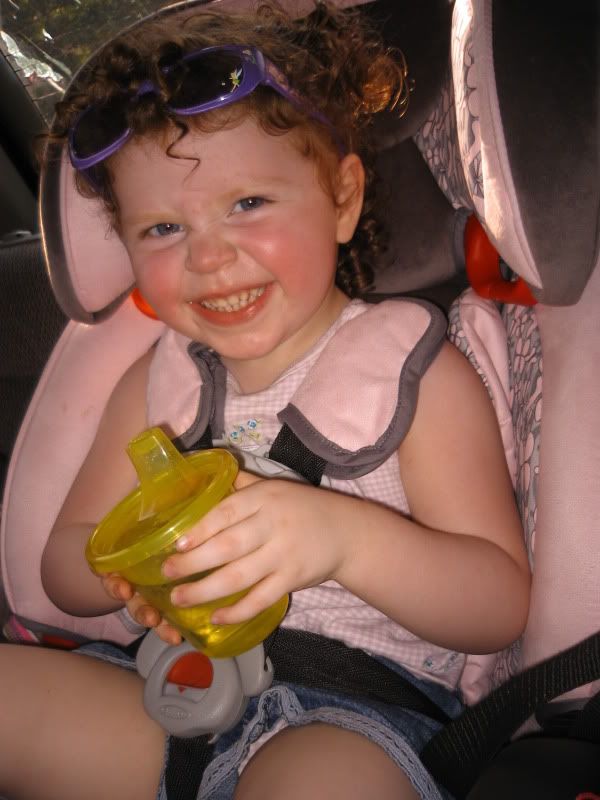
044.jpg Lilly in her carseat picture by Xakana
So, the World Health Organisation (WHO) and UNICEF recommend a minimum of two years of nursing 'or beyond'. A lot of people don't know that. The American Academy of Pediatricians (AAP) and American Academy of Family Physicians (AAFP) recommend a minimum of one year and then 'as long thereafter as mother and child desire.' Both recommend no other substances in the first six months of life.

So, according to the experts, babies should be nursed at least a year. We all know that this isn't usually the case in the US, though in other countries, the time varies both in modern times and historically. In UK Europe, nursing only through infancy has been a pattern for quite a while, while in Japan the norm was 2 years and China was recorded as children nursing until up to 5 years. The worldwide average for weaning is 2.8-4.2 years (depending on the study and if the US is included--it drags the worldwide average down due to its low breastfeeding rate, premature weaning tradition and large population).

Okay, so that's all the recommendations and the average and yada yada. Now, one question I was once asked as my still non-verbal toddler nursed was, "Don't you have to wean soon?"

It was asked in complete innocence and I answered honestly, "No. Children will wean on their own. I don't actually have to do so."

It's true! While rarely, children will nurse 6-7 years, the average age of children weaning on their own is much earlier--about the range of the worldwide averages, actually. Somewhere between ages 2 and 5. Children will not typically wean without some sort of encouragement (even if not deliberate) before 18 months of age.

Does that mean every family has to wait until their child is ready? Of course not! Waiting at least the minimum 2 years is best for baby and mom, but people wean in many different ways for many different reasons. Some women wean earlier than they would like due to work, lack of support, medical conditions, peer pressure, etc. Some women nurse longer than they actually want because they aren't sure how to wean; and some women are simply "done" before their children. Nursing IS a two way street.

I'm not going to tell you how to wean. I have no clue. It's not something I'm interested in. But I will now tell you about the different kinds of weaning. Oh, and a child after the age of 6 months who nurses, starts eating food just like bottle fed babies between 6-14 months and eats the same stuff ;) They drink from cups (mine started drinking water from cups at 6 months with my first taking pumped milk as early as 4 months in a Nuby Softspout--we mostly skipped sippies and went with straw cups for better oral development--until my second decided that they were more fun upside down, so we switched back to sippy cups for her--though she and her sister both can drink from open cups easily... I even prefer straw cups for me for minimizing spills) at the same ages and nothing changes except that they still take nourishment from their mother directly.

Parent-led weaning: This is the most common. This is when the mother chooses to wean and institutes a weaning strategy, such as "Don't offer/don't refuse," gently replacing nursing sessions, going out of town, pretending her breasts are broken, etc.

Influenced weaning: This one isn't talked about very much and is one of the main reasons that I'm writing this entry. Influenced weaning is when a child is weaned due to circumstances such as milk drying up, accidental parent-led weaning (such as a mother instituting "Don't offer/don't refuse" without knowing that it's a weaning technique, refusing to nurse so often that the child gives up or giving cues that they don't want to nurse anymore which the child picks up on), or societal pressure (such as the father or a nosey grandparent or auntie making rude comments that shame the child or parent, disparage the nursing relationship or attempt to make the child feel bad for nursing--like saying 'Big girls don't nurse! Don't you want to be a big girl?'). Nursing strikes would also fall into this category (more explanation on this later).

Mutual weaning: This is pretty rare and comes from the mother and child making a deal that they will stop nursing at a certain point. This is usually in a full-term nursing relationship (2+ years) when the child is old enough to be reasoned with and the parent no longer desires to nurse.

Child-led weaning: This is when the child is given support to nurse but slowly and gradually stops doing so on their own time.

Sudden cessation of nursing is not child-led weaning, it's a nursing strike. Nursing strikes happen for a variety of reasons and at different ages in life, but usually in the first two years. Nursing strikes are often used to wean children without trauma, but if they occur in the first year of life, they should be reversed if at all possible, unless the mother needs to stop nursing for some reason.


So there you have it. The different ways that children wean. For extensive information on weaning, "How Weaning Happens" by Diane Bengson is considered the best book by all the friends I know, on explaining the subject (warning: this is NOT a book on how to wean!).

Happy nursing (and weaning)!


Some resources I used (outside of several books):

http://aappolicy.aappublications.org/cgi/content/full/pediatrics;115/2/496
http://www.aafp.org/online/en/home/policy/policies/b/breastfeedingpolicy.html
http://www.wpro.who.int/media_centre/fact_sheets/fs_20070801.htm
http://www.amazon.com/How-Weaning-Happens-Diane-Bengson/dp/0912500549

Tuesday, September 14, 2010

Why txt spk bugs the hell out of me

It hurts my eyes. Plain and simple. It's almost a physical pain. I understand being in a hurry, having limited space (twitter, text messages on a T9, that sort of thing) but if you have a full keyboard at your arsenal and unlimited space/messages, then there is absolutely no reason to write out this sentence:

I hope you're having a great day.

as:

hope ur having a gr8 day

You had damn well better have only 5 seconds to type if you're sending that message. It makes you look not only stupid, but either 13-16 or 30+ Yes, either so young you're new to the scene or so old that you learned to text with a T9.

In IM or on forums, I'm flexible. If a phrase/group of words is being said a lot, acronyms don't bother me, nor do some abbreviations. Acronyms don't even really bother me in general, it's the mutilation of words, particularly by including numbers in place of letters. That's for license plates, people, not communication. I. DESPISE. THAT.

If I'm using words like 'ur' then I'm either in a crisis or I am typing so furiously on my phone that you're glad you're not in front of me, because I'd be shouting or hitting you with my phone. Or my hand is cramping from using that tiny damn qwerty board and we're trying to have a conversation that is too long for texting.

In short, if you have a real keyboard, use real words. PLEASE. Use them correctly.

Thank you.

Friday, September 10, 2010

Supply Issues Without Bottles

Okay, so when we have serious supply issues, what's our first thought to do? Supplement. Sometimes it's with breast milk, sometimes with formula, but no matter which, the typical method of giving this supplement is counterproductive to breastfeeding: bottles.

So I'm going to show you another option, that will bring your supply up if you need to supplement. It's not as easy to feed as with a bottle, maybe, but it will not only make certain your infant is getting everything she or he needs, but also will raise your supply and cannot cause nipple confusion or nipple preference.


The Lact-aid. I've suggested this in the past, but it sounds complicated to people and really, it's not.

(image is of the Medela SNS from their site)

What is a lact-aid? It's a thin tube that supplies milk to the baby while he or she is latched onto the breast and suckling. What's at the other end of the tube varies. It can be a bottle with the nipple cut off or the hole enlarged, or it can be thawed bags of breast milk. The lact-aid tube can be held or taped to the chest for the Mommy-on-the-go (who is breastfeeding while doing other things--usually accomplished by having baby in a sling) or the Mommy who has a baby who might pull the tube out of his/her mouth.

How is it used? You simply get baby latched on, then slip the tube into the mouth, towards the roof of the mouth until the milk gets sucked up.


Here's
a video of a lact-aid being introduced. (it will open a video download window).

Lact-aids (or supplemental nurser systems, SNS for short) can be obtained through lactation consultants or a few websites, including through Medela.


I hope this offers another option to moms who are worried about their supplies, but don't want to introduce bottles, have had issues with nipple confusion/preference already or have babies who won't TAKE a bottle. And, with a little practice, it is just as easy as using a bottle--or easier if you're using pumped milk, as you don't have to transfer it from the bag you froze it in!

This is also a way that moms who just can't produce milk can give their babies formula and have the bonding and skin-to-skin contact that breastfeeding brings and babies need. In fact, it may stimulate a mom who had trouble making milk into making milk. Maybe not enough to fully feed off of (although that's a possibility) but every drop counts!

This is also an option for moms choosing to relactate to build up their supply faster than just pumping.

Here is a site with a few images of the lact-aid in use (and instructions how): http://lact-aid.com/rpt022.htm#positioning

And a site with SNS in use: http://www.breastfeed-essentials.com/accessories.html#SNS

Monday, August 30, 2010

Intact Penis Information

I have many friends who have intact sons, so I've been inundated with information about the proper care and expectations of intact penises, despite not having a son (yet?) of my own. However, despite the abundance of information available, many doctors in the US are poorly educated and give out bad information because they just haven't seen that many intact penises. The overall US circumcision rate is around 75%1 or so, though the latest statistic for new infants being circumcised is 33%2 (average--the south and midwest having the highest number, varying from 50% upward and the west having the lowest percentage) down from 57% in 1999. If these numbers are true, then doctors need to update their information for dealing with intact boys coming through their practices to properly answer the following questions.

So, let's start with the basics. How do you clean an intact penis?

Mis-educated doctors will answer with, "You gently retract the foreskin and wash with soap and water."

Except for the first part, that's right. You do NOT retract the foreskin--that is the boy's job when he is older, under his own initiative. However, simple soap and water, just like with a girl, is all it takes to clean it.

Next, is "ballooning" a cause for concern?

No. It's caused by the natural separation of the foreskin leaving pockets behind in which urine pools. It does come out eventually and in the meantime, urine is sterile. Apparently, some boys like to play a game that causes ballooning (which is messy but harmless). The biggest concern is that there is an obstruction to voiding, but under study, this was shown not to be so. 3 As long as there is no pain or infection, this is a normal process, particularly around the age of 3 and should go away as he gets older.

When should the skin retract?

This is the most common source of concern for parents of intact boys. The first study done on this subject only followed boys for 5 years who were forcibly retracted from infancy and thus, states that 90% of boys will retract by age 5. This study was refuted over and over and the current advice is that it will retract by puberty. Now, the misunderstanding comes with "by puberty." In fact, it is by late puberty that one should expect retraction (age 15-17, though 5% of men remain non-retractile until the early 20s when, anecdote suggests that most of the remaining men gain the ability to retract, but no studies have been done). At age 12-13 (early puberty), 40% of boys remain non-retractile.4

So, the answer is, it should retract by age 17, but a very small number of men don't retract until age 20 or later. Only the boy should retract his foreskin and he should be advised not to do so where he experiences pain. Forced retraction can cause iatrogenic phimosis,5 which causes the foreskin to be too tight to be retracted or scarring from torn adhesions that can cause the foreskin not to retract properly later and can cause severe pain when retraction occurs.

My son has been diagnosed with phimosis and I've heard that circumcision is the only treatment. Is this true?

First, there are two different kinds of phimosis. Phimosis is a condition where the foreskin either cannot retract or when it does, it chokes or creates a "waist" on the penile shaft, resulting in damage or pain. Pysiological phimosis is the natural period in which the foreskin is non-retractile. Pathological phimosis is problematic and typically caused by Lichen sclerosus, scarring caused by forcible retraction or Balanitis.

Pathological phimosis can be treated with steroid creams (4-6 weeks) 6 (note, in this study, it's stated that circumcision is mandatory following failure, but this is not so, three other, yet still surgical in two cases, options remain), balloon stretching7, dorsal slit8, preputioplasty9 and finally, circumcision, but pathological phimosis is an adult condition, typically. If the boy is experiencing issues with pain, inability to urinate or frequent infections and phimosis is diagnosed, it may be in his best interest to look begin non-surgical treatments first and if the condition persists, consider corrective surgery with circumcision as a last resort (unless he is mature enough to decide that circumcision is preferable).

So, those are the most common questions about care of the intact penis. You can do more reading here: http://www.cirp.org/library/normal/
and here: DAC faq sheet on intact penile care


In regards to circumcised penises, US doctors are well versed and are capable of answering parent's questions and concerns about penile care. Caution needs be exercised when cleaning until it's healed and then normal washing, the same as an intact penis, is all that's needed.10

Thursday, August 19, 2010

Not all of any group are the same

You know, I hate to think that anyone I know is ignorant enough to blame all adherents of a religion for an extremist group's actions (or all members of a race for a few individual's actions), but I know a lot of different kinds of people. Now I need to rant some.

Right now, there is a hot, huge debate over building a Mosque in New York (btw, one tower has already been rebuilt and as second should be finished in 2011, as one of the tallest towers in the world, on "ground zero" and 3 more are going to be built when the economy is recovered) in place of an old Burlington Coat Factory. I personally don't care one way or another whether a worship house of any kind--church, chapel, cathedral, synagogue, mosque, mandir, temple, kingdom hall, meeting house, hof, jinja, gurdwara, etc.--is built anywhere. But I am sad at knowing that my "friends" are hateful and ignorant.

Let's look at a few things here.

1. Al-Queda is not the pope of Islamists. Their actions are not sanctioned. In fact, they are facists that are at war with other Muslims because they are violent extremists. Not saying that Islam has a clean record by any means--they have the highest number of martyrs on record and some of the worst hate crimes. But that has nothing to do with individual American Muslims.

2. Americans can't seem to tell the difference between a Muslim and a Sikh, as evidenced by the bombing of a Hindu temple and the murder of an innocent man, a Sikh, simply because they wore turbans on September 15th and 17th. So, rather than have anything behind their hate, they focus on one symbol and attack. Wow. Fred Phelps wields a cross--should I blame anyone wearing a cross for his hate? Or the Son of Sam? Jeffery Dahmer?

"On TV a woman said she had interviewed more serial killers, just after they were caught, than any other person. She said "when you ask a serial killer questions like "Why did you murder this moral, loving married person with children?" "Didn’t you think of how terrible this would be to her husband, her children, her parents?" Almost all serial killers start quoting one verse after another from the Christian Bible. This shows most serial killers had strong religious upbringing, have been studying the bible for years and were still very Christian religious when they were murdering."

3. 'Muslim organizations in the United States were swift to condemn the attacks on 9/11 and called "upon Muslim Americans to come forward with their skills and resources to help alleviate the sufferings of the affected people and their families". Top organizations include: Islamic Society of North America, American Muslim Alliance, American Muslim Council, Council on American-Islamic Relations, Islamic Circle of North America, and the Shari'a Scholars Association of North America. Along with massive monetary donations, many Islamic organizations launched blood drives and provided medical assistance, food, and shelter for victims.'1

4. America's hands are FAR from clean. Let's look at some numbers--The 9-11 terrorists claimed 2,995 lives. 2 million deaths were directly attributed specifically to Americans of Africans as we enslaved them. America claimed 500,000 lives through firebombs and 166,000 plus 80,000 lives through nuclear attack in Japan only 65 years ago.
How would you like to be held responsible for those lives, having had nothing to do with it?


5. Christian hands are far from clean. Let's start with the four different Inquisitions that have been held with unknown death tolls because mostly, they were kept shrouded by fear of death. The 40,000-100,000 deaths of innocent persons through witch hunts from 1480 to 1700 alone. The Crusades ring a bell? Yeah, there were at least nine of them. Ireland?
How do those lives sit on your shoulders? Do you like being held accountable for the crimes of others in your religion? Or those existing on the fringe as extremists?


6. Bigotry during and following wars is nothing new. Those claiming the side of being "against" Muslims and/or Arabs are in good company with those who hated the Japanese, Koreans, black people, British, etc. after various wars. Just in America alone, of course (not bigotry--the whole world suffers--but just talking about bigotry IN America).

7. Saying that there should be no mosque in New York is the same as saying there should be no churches, chapels or cathedrals in the United States--after all, Christians came and slaughtered the native population in the name of "civilization" and most certainly committed terrorism against the Abenaki, Algonquin, Apache, Blackfoot, Chadwickian, Cherokee, Choctaw, Comanche, Hopi, Iroquois, Lakota Sioux, Mahicans (also Mohicans), Mohave, Mohawk, Navajo, Nipmuc, Ojibwa, Paiute, Seminole, Seneca, Sioux, Mik, Wyandottes, Zuni, and Neilorw peoples, amongst others.

Lots more could be said on this, but in the end, I don't want to read any more. It's very hard, reading about these kinds of things and hate, to believe that the dirty in the ocean of humanity is only a drop. The sheer numbers of people murdered by focusing on this kind of garbage is depressing and sickening.

This country was founded by people escaping religious persecution--how would those people feel about how their descendants have continued the tradition that they attempted to end centuries ago?

Americans--it's all about us. Don't get me wrong, I love being American (and hell, I'm part Cherokee, so I'm more American than most of the people having this debate), but sometimes I see why the rest of the world is disgusted by us. People talk about 9-11 being the worst atrocity ever and while it was a horrible crime, it doesn't even compare to real atrocities.

What could be worse? It makes me sick when people seriously ask this, but they do. Since they've forgotten history, here's just a very tiny bit:

4,000 Cherokee and 2,500–6,000 Choctaw died on the Trail of Tears (that's 6,500-10,000 innocent people who died under horrible conditions). That's a small atrocity that can compare a little.

Rwanda's death toll was an estimated 800,000 people. That's a real atrocity.

The Holocaust death toll was 6 Million. (Hitler claimed that concentration camps as well as the practicality of genocide owed much to his studies of English and United States history)

30 to 60 million Africans died being enslaved from the sixteenth to nineteenth centuries.


Why can't people just accept diversity? I only know one Muslim myself and he is a very nice guy who is non-violent down to his own family. Just like most American Muslims, he was horrified by 9-11 and had zero to do with it.

The point of the Mosque is NOT to worship the assholes that murdered nearly 3000 people in 2001, but to worship a religion as valid as any Christian religion and to bring a community center (a Muslim YMCA of sorts) to the area. The mosque is only a small part--the plan includes a 500-seat auditorium, theater, performing arts center, fitness center, swimming pool, basketball court, childcare services, art exhibitions, bookstore, culinary school, and a food court.

Interestingly, while the majority oppose its building, the majority also say that they have the right to do so. Many families of 9-11 victims have even said that they welcome it as "an opportunity for Muslims to demonstrate peaceful Islamic values."

Like I said, I don't really have an opinion on it being built--I see both sides of the argument. What's got me upset is the bigoted comments about Muslims in general. I hate bigotry of any kind. Blaming all Muslims for the atrocities of a few. It's tired. Can we please stop getting behind every "Let's hate these people" campaign that comes along?

Monday, August 16, 2010

Myths of BabyWise

Myths and Facts about Baby Wise:


#1. BW/GKGW is church approved: Myth! The only church that (consistently) approves of this program is the one the author founded himself. Attempts to use it in other churches have ended in excommunication from most Christian communities the Ezzos have come in contact with. They have been accused of cultish behavior (which is different from being a cult) by respected Christian authorities, from scripture twisting (analysis of scriptures referenced show a lack of context with the situation and other scriptures can actually be found to denounce many claims made within the books) to isolationism, brainwashing (GKGW users are well programed to be angry at negativity surrounding the program, to not process when presented with facts), exclusivity, authoritarianism and physical and emotional endangerment. While the program is taught from many churches nationwide, they are taught by parents, not as a part of church curriculum.

#2. BW is pro-breastfeeding. Myth! In truth, most mothers, no matter how abundant their milk starts out, under the scheduling in BW (which was originally 4 hour intervals until babies started dying under such neglect and has been edited to 2.5-3 hours in current editions) almost all mothers in the program lose supply by 5 months. Typical weaning age of a BW user is 4-6 months. Originally, the Ezzos suggested abandoning breastfeeding at 3 weeks. While there are always exceptions to any rule, the fact remains that the rule in BW is to destroy a mother's supply and starve her baby (BW is linked to FTT from starvation and dehydration).

#3. BW is not abuse. Questionable -- BW users are flagged in several CPS divisions as 'potential abusers' and a child abuse prevention council's religious task force (including evangelical Christian pastors) investigating BW programs found that they were not developmentally and age appropriate. It further concluded that the programs did not consider individual temperament, have a balance of loving guidance and discipline, or foster parental discernment.

#4. GKGW creates a harmonious home. Myth! In fact, GKGW creates a permanent struggle between parent and child. Most users describe their relationship with their children as "Adversarial." It's also been commented by many mothers that they feel no bond towards their child(ren) while using the program.

#5. GKGW is the only Christian Parenting style. Myth! Attachment Parenting, which GFI slurs on a constant basis is actually made up majority of Christians and Catholics. Dr. Sears, the original AP author, is a Christian himself and has authored a Christian Parenting book.

#6. GKGW teaches children to respect their parents. Myth! Definition of Respect: the condition of being esteemed or honored: to be held in respect. To show regard or consideration for: to respect someone's rights. To feel or show deferential regard for; esteem. The truth: most children raised under GKGW fear their parents and escape them as soon as they are old enough to go. The Ezzos have no contact with their adult children. Their youngest daughter was last quoted as saying she will not have further contact with her parents and is praying for their souls.

#7. GKGW teaches children to behave properly. Myth! In truth, one of the biggest complaints from users is that they have difficulty controlling their children in public. Anger, emotional and anxiety disorders are prevalent in children in this program as is severe depression and low self-worth, which contributes to episodes of 'acting out'. When tested, they show no ability to differentiate right from wrong without an authority figure to ask and have few to no decision-making skills.

8. Crying it Out is harmless. Myth! CIO has been proven to cause brain damage, is linked to emotional disorders (one of the first questions asked when looking into these is 'If your child was was left to cry, do you believe, that at any point he may have felt abandoned or hopeless?" It is linked to ADHD (which is a brain chemical imbalance), ADD, Attachment Disorder (which there is no cure for and causes lifelong bonding and empathy issues), certain forms of autism, depression and Abandonment complex. Also, babies that are left to CIO tend to grow to be children who cannot self-soothe and are unable to handle any change in their sleeping routine. As toddlers, they often resort to crying faster than babies who are not left to CIO and are typically harder to comfort.

9. BW babies sleep through the night. Impossible to determine. In actuality, no one can be sure. For one, many mothers have mistaken catatonic babies who are weak from hunger and crying as being asleep. For two, since BW parents aren't around their babies at night, they often aren't aware of the babies waking and lying alone in their rooms, wide awake. Also, CIO conditions you to no longer hear your baby's cries, as illustrated in this quote:

I thought T, our second child, had started sleeping through the night early--as Babywise promised and as J had done. It was only because my sister was staying with us for a few months that I found out I had become immune to his nighttime cries. I just didn't hear and register them--she occasionally woke me up to take care of the baby or would ask "Didn't you hear him crying last night?"

#10. Attachment Parenting results in unruly children running the household. Myth! In truth, children who are raised with real AP parents have boundaries and rules and respect for their parents. Ezzo seemed to confuse Attachment Parenting (which is Breastfeeding, Birth Bonding, Baby-wearing--for mother's convenience as well as baby's well-being, Bedding close to baby--again, for mother's convenience and baby's well-being, as it is shown to dramatically reduce the risk of SIDS, Belief in baby's cry as a form of communication, being prepared for birth and Balance--meaning balancing being husband and wife as well as being parents, so that no one's needs are unfulfilled) with permissive parenting (where the parents are basically absent of decision making within the family).

Quotes from GKGW moms who were either separated from their BW communities or accidentally ended up in AP communities:

"For the first time we were separated from our group of close friends who all were pro-Ezzo. We developed other close friends who seemed to be practicing "attachment parenting". At first I thought these families were ruled by their kids, but over time I noticed what trusting relationships they had and how great their kids were, without all the stress we were having, and had been through."

"At that time, I joined a mom's group and met some attachment parents. I had such a negative image of these parents in my mind because of everything Ezzo had said about their parenting philosophy. I expected their children to be holy terrors. What I found astounded me. Their children were so loving and thoughtful without even having to be prompted! They listened to their mothers and did everything that was asked of them. It wasn't a robotic obedience, either. I could tell these kids genuinely wanted to please their mothers. Moreover, their mothers seemed to enjoy them so much! I could tell that the relationship they had with their children was strong and based in trust and love. "

11. People who don't like GKGW have never read or used GKGW. Myth! In actuality, the people who speak out the strongest against BW, TW, GKGW, Prep, etc. are the parents who have used it. Contact moms, ministers, minister's wives, decade-long users, etc. They watched it rip their families apart, had children diagnosed with horrible, life-shattering disabilities, had babies nearly die, put on NG feedings, etc. Some just realized that they were miserable under the program, as much as they professed otherwise--sometimes because they believed they would be bad parents if they were unhappy with it.

12: People who don't like BW are Ezzo-bashers. Myth AND Fact! Many anti-GKGW parents actually met and liked the Ezzos themselves. It's the teachings and methods they don't agree with. While I, personally, have a problem with anyone who would endorse child-abuse and neglect on such a wide-scale as Gary Ezzo has, I am not, by far, the only opinion on this subject.

13. Couples should spend at least 15 minutes together every day conversing with each other and focusing on their relationship. Fact! This is probably the best advice in the whole system. However, it should NOT be at the expense of the children's time. They can converse while the kids are taking a bath (or while giving them the bath), before the kids get up in the morning, after they go to bed, etc. There is no reason to sacrifice your relationship with your children for your relationship with your spouse/significant other. And you don't have to do it sitting on a couch! It can even be in the car, driving to the store! It's good to acknowledge your loved ones--all of them.

So, to wrap it up, Baby Wise, Toddler Wise or Growing Kids God's Way is a dangerous system that is highly-criticized, linked to failure to thrive in infants, abuse in toddlers and children, attachment disorders, emotional disorders, lack of family bonding, resentment and fear in children; is run by a man who publishes himself, writes inaccurate information against medical advice and is probably as far from "What would Jesus do" as one can get, in this author's opinion. I don't see a man who stopped a prostitute from being stoned as being supportive of harming children or who said that the Kingdom of Heaven belonged to infants and children or who said praise could fall from those same lips would advocate someone ignoring the gifts of communication God has bestowed upon infants for a man's schedule or forsaking the instincts God gave us to care for our children.

It is unbelievable to me that there are people who believe they are doing good by their children by torturing them. Sure, they may end up with zealous children suffering from Stockholm syndrome--if they ever manage to get the random acts of kindness in, which would certainly make them feel justified, but they're just as likely raising sociopaths or people who will never be able to care for themselves from the serious trauma they've inflicted. And not realizing that neglect and abuse are neglect (Child Neglect can be defined as “the persistent failure to meet a child’s basic physical and/or psychological needs”) and abuse (Abuse is a pattern of coercive control that one person exercises over another. Battering is a behavior that physically harms, arouses fear, prevents a person from doing what he/she reasonably wishes or forces her to behave in ways he/she does not want) is just something I will never understand.


Disclaimer: This is an opinion piece written using facts taken from multiple sources, stories of current and ex-GKGW/BW users (anecdotal evidence), various medical and theological studies, the Bible and Holy Scripture, Legal Definition sources, Dictionary.com, Wikipedia (only from verified, properly referenced source material), AskDrSears.com, and http://www.ezzo.info/ and is not a substitute for medical advice, psychological evaluation, legal advice or theological counseling and is not endorsed by any entity. Originally published under the title "BabyWise: BabyLies--Proof that if Satan wrote a book and said it was Godly, people would line up to sell their souls." Taken from the quote: "[BW] is proof that if Satan wrote a book and claimed it was church approved, there are plenty of [parents] who would abuse their kids and sell their souls."

Thursday, August 12, 2010

No, babies DON'T need to cry

Most people don't realize that leaving baby to "Cry it out" is doing more harm than the good that the extra bit of sleep it gives the parents could ever do. First, parents are adults--they understand why they aren't having their needs met (typically, sleep in this case), but infants are incapable of understanding complex concepts like this until 2-3 YEARS of age (at least)! A newborn is truthfully a 'blank slate' right down to their smooth, unformed brain.
People believe they're even doing GOOD for their child by forcing them to cry, alone in a crib, unknowing why they have been left. It's not human nature to leave our babies behind--before industrialized nations, we never would have done so. To do so would have meant death, very quickly, for the baby. So, a baby, when left alone, does not know what is going on. Instinctively, it cries to get attention from its parents, desperate not to be left to die.
"My baby doesn't feel abandoned!" cries the mother who uses CIO. Um, really? You're telepathic? You can experience your baby's emotions and hear his/her thoughts? Because unless all of that is true, you have no idea what it's doing to your baby. You have no idea what your baby is feeling, except by what your baby.
If YOU were left in a place that was frightening, huge, unfamiliar (it can take months for familiarity to set in, even in an adult, but particularly in a baby, who has little to no memory or ability to form memories and no ability to form permanent memory) place where you were unable to move and everything you had ever known (loud, warm, soft, close quarters where you could constantly smell your mother, were never hungry or unhappy) was suddenly ripped away and you were hungry, but unable to feed yourself or tell anyone that you're hungry in terms they can understand, or cold or scared or lying in your own filth because, since you can't move, you cannot clean the waste coming out of your body--imagine being in a hospital bed in a foreign country where everyone speaks with clicks.
How would you feel? Especially if, for the entirety of your life before, your every need was met and you had never experienced discomfort before? You knew you could rely on your mother to keep it that way and suddenly, she's gone. Maybe she reappears, but she's speaking that strange clicking language and you don't know how to get her to understand that you have needs. What's more, she doesn't seem to care! She left while you were still crying for help!
Abandonment, frustration, fear (what if they don't remember to feed you? After all, you're hungry and you have no concept of time at all--you don't know what that is!), and they don't seem to understand, because they just fed you, that you had to stop because you were tired or thought you were full, but it was just a gas bubble or the food digested just that quickly and you need more), loneliness... just a few of the feelings you might have.
That's a peek into the life of the baby left to CIO. Their first view of the world... how can that possibly be okay? If you were introduced to a country in that way, would you trust anyone there? No, you wouldn't and to say otherwise is to lie to yourself.
Science Says: Excessive Crying Could Be Harmful to Babies
Science tells us that when babies cry alone and unattended, they experience panic and anxiety. Their bodies and brains are flooded with adrenaline and cortisol stress hormones. Science has also found that when developing brain tissue is exposed to these hormones for prolonged periods these nerves won’t form connections to other nerves and will degenerate. Is it therefore possible that infants who endure many nights or weeks of crying-it-out alone are actually suffering harmful neurologic effects that may have permanent implications on the development of sections of their brain? Here is how science answers this alarming question:
Chemical and hormonal imbalances in the brain
Research has shown that infants who are routinely separated from parents in a stressful way have abnormally high levels of the stress hormone cortisol, as well as lower growth hormone levels. These imbalances inhibit the development of nerve tissue in the brain, suppress growth, and depress the immune system.
Researchers at Yale University and Harvard Medical School found that intense stress early in life can alter the brain’s neurotransmitter systems and cause structural and functional changes in regions of the brain similar to those seen in adults with depression.
One study showed infants who experienced persistent crying episodes were 10 times more likely to have ADHD as a child, along with poor school performance and antisocial behavior. The researchers concluded these findings may be due to the lack of responsive attitude of the parents toward their babies.
Dr. Bruce Perry’s research at Baylor University may explain this finding. He found when chronic stress over-stimulates an infant’s brain stem (the part of the brain that controls adrenaline release), and the portions of the brain that thrive on physical and emotional input are neglected (such as when a baby is repeatedly left to cry alone), the child will grow up with an over-active adrenaline system. Such a child will display increased aggression, impulsivity, and violence later in life because the brainstem floods the body with adrenaline and other stress hormones at inappropriate and frequent times.
Dr. Allan Schore of the UCLA School of Medicine has demonstrated that the stress hormone cortisol (which floods the brain during intense crying and other stressful events) actually destroys nerve connections in critical portions of an infant’s developing brain. In addition, when the portions of the brain responsible for attachment and emotional control are not stimulated during infancy (as may occur when a baby is repeatedly neglected) these sections of the brain will not develop. The result – a violent, impulsive, emotionally unattached child. He concludes that the sensitivity and responsiveness of a parent stimulates and shapes the nerve connections in key sections of the brain responsible for attachment and emotional well-being.
Decreased intellectual, emotional, and social development
Infant developmental specialist Dr. Michael Lewis presented research findings at an American Academy of Pediatrics meeting, concluding that “the single most important influence of a child’s intellectual development is the responsiveness of the mother to the cues of her baby.”
Researchers have found babies whose cries are usually ignored will not develop healthy intellectual and social skills.
Dr. Rao and colleagues at the National Institutes of Health showed that infants with prolonged crying (but not due to colic) in the first 3 months of life had an average IQ 9 points lower at 5 years of age. They also showed poor fine motor development.
Researchers at Pennsylvania State and Arizona State Universities found that infants with excessive crying during the early months showed more difficulty controlling their emotions and became even fussier when parents tried to consol them at 10 months.
Other research has shown that these babies have a more annoying quality to their cry, are more clingy during the day, and take longer to become independent as children.
Harmful physiologic changes
Animal and human research has shown when separated from parents, infants and children show unstable temperatures, heart arrhythmias, and decreased REM sleep (the stage of sleep that promotes brain development).1
There is a four-year period of "potential" growth, which is the most critical period of human development. This time is from conception until about the third birthday. During this time, all things are possible - learning to walk, learning to talk, learning how to "fit in" to society. There is a need for many experiences in order to master skills. (Families and Work Institute, 1996). Maria Montessori, years ago, called this time that of the ABSORBENT MIND (La Mente del Bambino). Her conclusions were similar to what scientists are finding today. (Montessori, 1953).2
We live in an age where we can know that the baby is safe in another room, despite the loudness of his cries. Does this mean we should leave babies to cry on their own? CIO proponents often advise that babies left to cry will eventually stop, and the duration of future crying bouts will decrease. What are the emotional consequences of crying for the infant when she is left unattended? Bowlby and colleagues initiated a series of studies where children between the ages of one and two who had good relationships with their mothers were separated from them and left to cry it out. Results showed a predictable sequence of behaviours: The first phase, labeled “protest”, consists of loud crying and extreme restlessness. The second phase, labeled “despair”, consists of monotonous crying, inactivity, and steady withdrawal. The third phase, labeled “detachment”, consists of a renewed interest in surroundings, albeit a remote, distant kind of interest. Thus, it appears that while leaving babies to cry it out can lead to the eventual dissipation of those cries, it also appears that this occurs due to the gradual development of apathy in the child. The child stops crying because she learns that she can no longer hope for the caregiver to provide comfort, not because her distress has been alleviated.
Do babies cry more when they are attended to? A 1986 study concluded just the opposite: the more a mother holds and carries her baby, the less the baby will cry and fuss. Cross-cultural studies also show that parents in non-Western societies are quicker than parents in Western societies to respond to their crying babies, and babies in non-Western societies cry for shorter spans of time. Caregivers in 78% of the world’s cultures respond quickly to an infant’s cries.3
Similar social learning opportunities occur when an infant attempts to communicate through its cries. Crying may be spurred because the infant is hungry, in pain, uncomfortable or frightened. Often upon waking, an infant will begin to signal to its caregiver with soft whimpering, which eventually accelerates into frantic crying if it receives no response.
Sometimes crying is misconstrued as an idealized expression of anger or manipulation. Yet, such distressed crying in a young infant might better be described as a fear response. A fear invoked by the uncomfortable feeling of being soiled, the rumbling of stomach pains, or the vulnerableness of being alone in the dark.
Fear of predators and death is an emotion deeply seated within our evolutionary biological makeup. In our earliest days, families and tribes huddled closely together in the dark to help soothe this fear. The idea of "safety in numbers" held true, because a larger group of humans would fair better warding off predators as a small group or sole individual would.
Today, we as parents may know that an infant is safe alone in its crib. However, the biology of an infant's brain is initially encoded with innate fear responses, which are easily prompted often in early life.
When the infant is in a state of helpless fear and panic the amygdala kicks in and sends messages to the brain to prepare the body for "flight or fight." An infant can neither fight nor flee. If the panic isn't subdued by intervention from a nurturing adult, the flood of chemicals and hormones may rage through the brain, specifically targeting the amygdala and hippocamus, for an unhealthy length of time.
Crying infants who are unattended have been known to cry desperately for an hour or more until the amygdala eventually shuts down. The infant in turn, learns after repeated episodes that it can not expect comfort and response to its cries, and it may decide its needs are unworthy of attention and nurturing--a decision which may ultimately affect the infant's development of self-worth and connectedness to the world.
Even though the brain may eventually determine it is not in any danger on its own, vital opportunities to develop and reinforce social lessons in trust, security and empathy may be missed if no attempt is made by a nurturing caregiver to calm that state of emotional turmoil.4
Originally Published Feb 13, 2008 at 3:04 PM

Wednesday, August 11, 2010

Discipline Without Violence

Things to do Instead of Hitting


Research confirms what many parents instinctively feel when they don't like to spank their child, but they don't know what else to do. The latest research from Dr. Murray Strauss at the Family Research Laboratory affirms that spanking teaches children to use acts of aggression and violence to solve their problems. It only teaches and perpetuates more violence, the very thing our society is so concerned about. This research further shows that children who have been spanked are more prone to low self-esteem, depression and accept lower paying jobs as adults. So, what do you do instead?

1 - Get Calm

First, if you feel angry and out of control and you want to spank or slap your child, leave the situation if you can. Calm down and get quiet. In that quiet time you will often find an alternative or solution to the problem. Sometimes parents lose it because they are under a lot of stress. Dinner is boiling over, the kids are fighting, the phone is ringing and your child drops the can of peas and you lose it. If you can't leave the situation, then mentally step back and count to ten.

2 - Take Time for Yourself

Parents are more prone to use spanking when they haven't had any time to themselves and they feel depleted and hurried. So, it is important for parents to take some time for themselves to exercise, read, take a walk or pray.

3 - Be Kind but Firm

Another frustrating situation where parents tend to spank is when your child hasn't listened to your repeated requests to behave. Finally, you spank to get your child to act appropriately. Another solution in these situations is to get down on your child's level, make eye contact, touch him gently and tell him, in a short, kind but firm phrase, what it is you want him to do. For example, "I want you to play quietly.

4 - Give Choices

Giving your child a choice is an effective alternative to spanking. If she is playing with her food at the table ask, Would you like to stop playing with your food or would you like to leave the table?" If the child continues to play with her food, you use kind but firm action by helping her down from the table. Then tell her that she can return to the table when she is ready to eat her food without playing in it.

5 - Use Logical Consequences

Consequences that are logically related to the behavior help teach children responsibility. For example, your child breaks a neighbor's window and you punish him by spanking him. What does he learn about the situation? He may learn to never do that again, but he also learns that he needs to hide his mistakes, blame it on someone else, lie, or simply not get caught. He may decide that he is bad or feel anger and revenge toward the parent who spanked him. When you spank a child, he may behave because he is afraid to get hit again. However, do you want your child to behave because he is afraid of you or because he respects you?

Compare that situation to a child who breaks a neighbor's window and his parent says, "I see you've broken the window, what will you do to repair it?" using a kind but firm tone of voice. The child decides to mow the neighbor's lawn and wash his car several times to repay the cost of breaking the window. What does the child learn in this situation? That mistakes are an inevitable part of life and it isn't so important that he made the mistake but that he takes responsibilty to repair the mistake. The focus is taken off the mistake and put on taking responsibility for repairing it. The child feels no anger or revenge toward his parent. And most importantly the child's self-esteem is not damaged.

6 - Do Make Ups

When children break agreements, parents tend to want to punish them An alternative is to have your child do a make-up. A make-up is something that people do to put themselves back into integrity with the person they broke the agreement with. For example, several boys were at a sleep-over at Larry's home. His father requested that they not leave the house after midnight. The boys broke their agreement. The father was angry and punished them by telling them they couldn't have a sleep-over for two months. Larry and his friends became angry, sullen and uncooperative as a result of the punishment. The father realized what he had done. He apologized for punishing them and told them how betrayed he felt and discussed the importance of keeping their word. He then asked the boys for a make-up. They decided to cut the lumber that the father needed to have cut in their backyard. The boys became excited and enthusiastic about the project and later kept their word on future sleep-overs.

7 - Withdraw from Conflict

Children who sass back at parents may provoke a parent to slap. In this situation, it is best if you withdraw from the situation immediately. Do not leave the room in anger or defeat. Calmly say, "I'll be in the next room when you want to talk more respectfully.

8 - Use kind but firm action

Instead of smacking an infant's hand or bottom when she touches something she isn't supposed to, kindly but firmly pick her up and take her to the next room. Offer her a toy or another item to distract her and say, "You can try again later." You may have to take her out several times if she is persistent.

9 - Inform Children Ahead of Time

A child's temper tantrum can easily set a parent off. Children frequently throw tantrums when they feel uninformed or powerless in a situation. Instead of telling your child he has to leave his friend's house at a moment's notice, tell him that you will be leaving in five minutes. This allows the child to complete what he was in the process of doing.

10 - Give Time-Ins

Be generous with your hugs. Sit close to your child while reading or coloring together. Tell your child how glad you are that he’s in the family … how well he shared … how hard he worked on something. Praise his efforts and tell him that you love him. Set aside “special time” for your child and make the most of it. Hang out without making demands or giving advice. Let your child choose an activity for you to do together: play catch, take a walk, play board games, go window shopping, bake cookies. These bits and pieces of time are often what children remember most.


Aggression is an obvious form of perpetuating violence in society. A more subtle form of this is spanking because it takes it's toll on a child's self-esteem, dampening his enthusiasm and causing him to be rebellious and uncooperative. Consider for a moment the vision of a family that knows how to win cooperation and creatively solve their problems without using force or violence. The alternatives are limitless and the results are calmer parents who feel more supported.

Article Copyright © 1995 INCAF